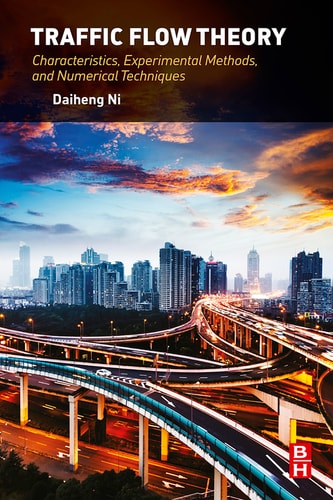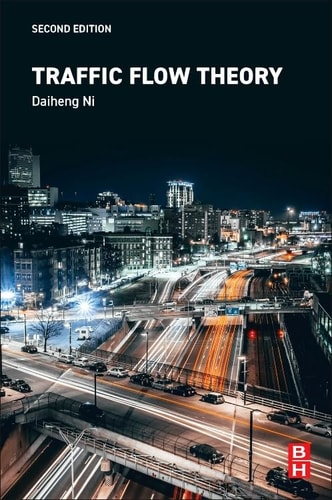
Traffic Flow Theory
0
0
As an Amazon Associate and affiliate partner, Menrva Books earns from qualifying purchases. Learn more
Author Description
Creating traffic models is a complex task due to the intricacies of road networks, space-time dependencies, heterogeneous traffic patterns, and numerous interacting components. The second edition of Traffic Flow Theory builds on foundational knowledge to express these elements in mathematical form and offers updated coverage of the latest field developments. Authored by a leading academic, the volume dissects everyday traffic phenomena, detailing their characteristics, mechanisms, and dynamics through multi-level modeling approaches (macroscopic, microscopic, mesoscopic, and picoscopic) to explain why these phenomena occur and how they can be effectively simulated. The book then explores the practical applications of these simulations and contributes new, research-informed evidence showing that integrating the various analytical frameworks leads to a unified perspective-with significant benefits for optimizing safety and efficiency in transportation systems. With its comprehensive, coherent, and self-contained treatment, Traffic Flow Theory 2E is set to become a staple reference for a broad transportation engineering audience and a valuable resource for readers in interconnected disciplines.
Menrva's Summary
THE THESIS
This book dissects everyday traffic phenomena, detailing their characteristics, mechanisms, and dynamics through multi-level modeling approaches to explain why these phenomena occur and how they can be effectively simulated. The second edition of Traffic Flow Theory builds on foundational knowledge to express the intricacies of road networks, space-time dependencies, heterogeneous traffic patterns, and numerous interacting components in mathematical form. Authored by a leading academic, Daiheng Ni, the volume offers updated coverage of the latest field developments and explores the practical applications of these simulations. It contributes new, research-informed evidence showing that integrating various analytical frameworks leads to a unified perspective with significant benefits for optimizing safety and efficiency in transportation systems.
THE SCOPE MAP
- Foundational knowledge for expressing traffic elements in mathematical form.
- Updated coverage of the latest field developments in traffic flow theory.
- Multi-level modeling approaches (macroscopic, microscopic, mesoscopic, and picoscopic).
- Explanation of traffic phenomena characteristics, mechanisms, and dynamics.
- Methods for effectively simulating traffic phenomena.
- Practical applications of traffic simulations.
- Research-informed evidence for integrating analytical frameworks for optimization.
THE AUTHORITY PERSPECTIVE
The second edition of Traffic Flow Theory is presented as a comprehensive and coherent reference for a broad transportation engineering audience, as well as readers in interconnected disciplines. Its detailed treatment of traffic phenomena through multi-level modeling and simulation is intended to provide a unified perspective for optimizing safety and efficiency. The book's approach is described as research-informed, contributing new evidence to the field. It aims to be a staple resource for professionals and academics seeking to understand and manage complex transportation systems.
Page Count:
600
Publication Date:
2026-01-30
Publisher:
Elsevier Science
ISBN-10:
0443337578
ISBN-13:
9780443337574
Science
Non-Fiction
Transportation Engineering
Simulation
Mathematical Modeling
Community Tags
Similar Books