Media Freedom in the Age of Citizen Journalism
0
0
As an Amazon Associate and affiliate partner, Menrva Books earns from qualifying purchases. Learn more
Author Description
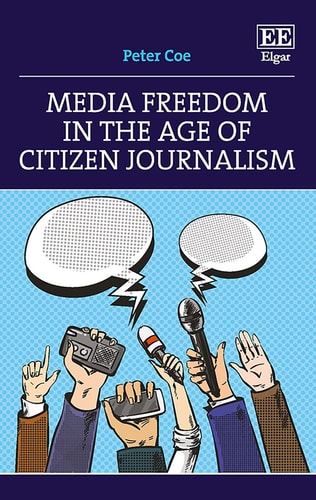
This timely book explores how the internet and social media have permanently altered the media landscape, enabling new actors to enter the marketplace and changing the way that news is generated, published and consumed. It examines the importance of citizen journalists, whose newsgathering and publication activities have made them crucial to public discourse and central actors in the communication revolution. Investigating how the internet and social media have enabled citizen journalism to flourish, and what this means for the traditional institutional press, the public sphere, and media freedom, the book demonstrates how communication and legal theory are applied in practice. Peter Coe advances a concept of 'media as a constitutional component', which distinguishes media from non-media actors based on the functions they perform, rather than institutional status, and uses this to provide a conceptual framework that recognises modern newsgathering and publication methods. This interdisciplinary book analyses the legal challenges created across a range of topical issues, including online anonymity and pseudonymity, defamation, privacy and public interest, contempt of court and press regulation. Media Freedom in the Age of Citizen Journalism will be a key resource for students, scholars, practitioners and policy-makers of information and media law, constitutional administrative law, communication and media studies, journalism and philosophy.
Menrva's Summary
THE THESIS
This book investigates the profound impact of the internet and social media on media freedom and the evolving landscape of journalism. It examines how new actors, particularly citizen journalists, have become integral to public discourse and the communication revolution, challenging traditional media structures. The author applies communication and legal theory to analyze the practical implications of these changes, proposing a conceptual framework that defines media functions rather than institutional status. The work delves into critical legal challenges arising from online anonymity, defamation, privacy, and press regulation.
THE SCOPE MAP
- The transformation of the media landscape by the internet and social media.
- The crucial role and impact of citizen journalists in contemporary public discourse.
- Analysis of legal challenges including online anonymity, defamation, privacy, and contempt of court.
- Application of communication and legal theory to modern newsgathering and publication.
- A conceptual framework of 'media as a constitutional component' based on function.
- Implications for the traditional press, the public sphere, and media freedom.
THE AUTHORITY PERSPECTIVE
The book is positioned as a key resource for students, scholars, practitioners, and policymakers in fields such as information and media law, constitutional administrative law, communication and media studies, journalism, and philosophy. Its interdisciplinary approach and focus on practical application of theory suggest it aims to provide a comprehensive overview of the legal and functional shifts in media. The analysis of topical issues like online anonymity and press regulation indicates a focus on current and pressing concerns within the field. The proposed concept of 'media as a constitutional component' offers a novel theoretical lens for understanding the evolving media ecosystem.
Page Count:
308
Publication Date:
2021-01-01
Publisher:
Edward Elgar Publishing
ISBN-10:
180037125X
ISBN-13:
9781800371255
Science & Technology
Non-Fiction
Politics
Media Law
Internet Law
Communication Studies
Journalism Studies
Constitutional Law
Community Tags
Similar Books