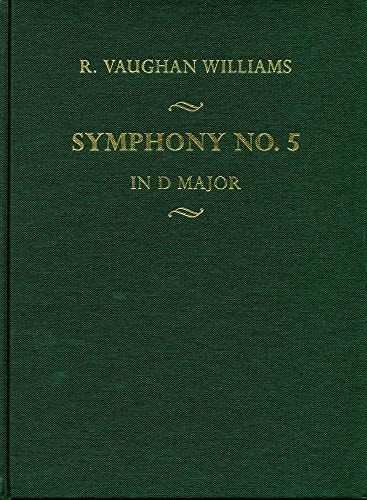
Vaughan Williams: Symphony No. 5
0
0
As an Amazon Associate and affiliate partner, Menrva Books earns from qualifying purchases. Learn more
Author Description
Despite having been composed in the years 1938-43 when Europe was ravaged by war, this work radiates peace and serenity. It marks the peak of the lyrical modalism of works such as the Fantasia on a Theme by Thomas Tallis (1910), Flos Campi (1925), and Job (1931). Although it is not a programme symphony, it draws heavily on John Bunyan's The Pilgrim's Progress for inspiration, featuring several themes that were sketched for (and eventually used in) Vaughan Williams's 1951 opera. In addition, Bunyan's words 'He hath given me rest by his sorrow and life by his death' were originally inscribed over the third movement. This idea of strength drawn from religion must have been especially potent when Vaughan Williams conducted the premiere of the work at the Proms in 1943, during the dark days of the Second World War. The ending in particular has a sense of rising above all worldly concerns into a higher spiritual plane.This edition contains an introduction by Michael Kennedy and textual notes. Orchestral parts are available on hire.
Menrva's Summary
THE THESIS
This work investigates the compositional origins, thematic inspirations, and historical context of Ralph Vaughan Williams's Symphony No. 5. Peter Horton provides a detailed analysis of the symphony's development during the Second World War, examining how the composer integrated modal lyricism with spiritual themes derived from John Bunyan's The Pilgrim's Progress. The text explores the intersection of the composer's creative process and the socio-political climate of 1943 Britain.
THE SCOPE MAP
What You Will Find
- Historical analysis of the symphony's composition between 1938 and 1943
- Examination of thematic connections to the opera The Pilgrim's Progress
- Contextual study of the work's premiere during the Second World War
- Introduction by Michael Kennedy and detailed textual notes
Scope Limits
- Does not provide a full biography of the composer
- Does not include the complete orchestral score
THE AUTHORITY PERSPECTIVE
Experts and musicologists regard this text as a definitive resource for understanding the structural and spiritual motivations behind one of Vaughan Williams's most significant compositions. Readers frequently note the clarity of the historical context provided, making it a valuable reference for both performers and students of twentieth-century British music.
Page Count:
128
Publication Date:
2008-08-25
Publisher:
Oxford University Press
ISBN-10:
0193359421
ISBN-13:
9780193359420
Biography
Music
Symphonies
Musicology
Music History
Symphony
Community Tags
Similar Books