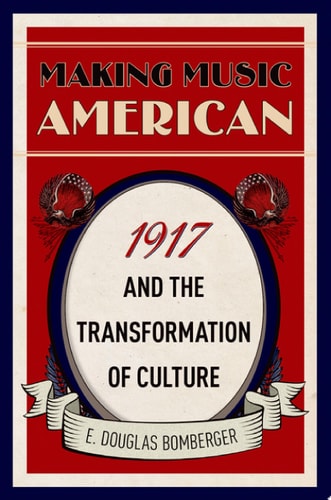
Making Music American
0
0
As an Amazon Associate and affiliate partner, Menrva Books earns from qualifying purchases. Learn more
Author Description
The Year 1917 Was Unlike Any Other In American History, Or In The History Of American Music. The United States Entered World War I, Jazz Burst Onto The National Scene, And The German Musicians Who Dominated Classical Music Were Forced From The Stage. As The Year Progressed, New Orleans Natives Nick Larocca And Freddie Keppard Popularized The New Genre Of Jazz, A Style That Suited The Frantic Mood Of The Era. African-american Bandleader James Reese Europe Accepted The Challenge Of Making The Band Of The Fifteenth New York Infantry Into The Best Military Band In The Country. Orchestral Conductors Walter Damrosch And Karl Muck Met The Public Demand For Classical Music While Also Responding To New Calls For Patriotic Music. Violinist Fritz Kreisler, Pianist Olga Samaroff, And Contralto Ernestine Schumann-heink Gave American Audiences The Best Of Old-world Musical Traditions While Walking A Tightrope Of Suspicion Because Of Their German Sympathies. Before The End Of The Year, The Careers Of These Eight Musicians Would Be Upended, And Music In America Would Never Be The Same. Making Music American Recounts The Musical Events Of This Tumultuous Year Month By Month From New Year's Eve 1916 To New Year's Day 1918. As The Story Unfolds, The Lives Of These Eight Musicians Intersect In Surprising Ways, Illuminating The Transformation Of American Attitudes Toward Music Both European And American. In This Unsettled Time, No One Was Safe From Suspicion, But America's Passion For Music Made The Rewards High For Those Who Could Balance Musical Skill With Diplomatic Savvy.
Menrva's Summary
THE THESIS
This book investigates how the cultural and political pressures of 1917, a year defined by World War I and shifting national identity, fundamentally transformed the American musical landscape. E. Douglas Bomberger, a musicologist, utilizes primary source documentation and biographical accounts to examine how eight prominent musicians navigated the tension between their artistic output and the rising anti-German sentiment in the United States. The work argues that the intersection of wartime nationalism and the emergence of jazz created a volatile environment that permanently altered the trajectory of American musical performance and public perception.
THE SCOPE MAP
What You Will Find
- A month-by-month chronological account of musical events from December 1916 to January 1918.
- Biographical profiles of figures including James Reese Europe, Karl Muck, and Fritz Kreisler.
- Analysis of the transition from German-dominated classical traditions to the rise of indigenous American jazz.
Scope Limits
- The study is strictly confined to the calendar year of 1917 and its immediate transition period.
- It does not provide a comprehensive history of American music beyond the specific sociopolitical context of the First World War.
THE AUTHORITY PERSPECTIVE
Scholars and music historians frequently cite this work as a precise examination of the intersection between wartime xenophobia and artistic evolution. Readers often note the academic rigor of the research while appreciating the narrative clarity with which the author connects individual biographies to broader historical shifts.
Page Count:
256
Publication Date:
2018-01-01
Publisher:
Oxford University Press
ISBN-10:
0190872322
ISBN-13:
9780190872328
History
Biography
Music History
World War
American History
Community Tags
Similar Books