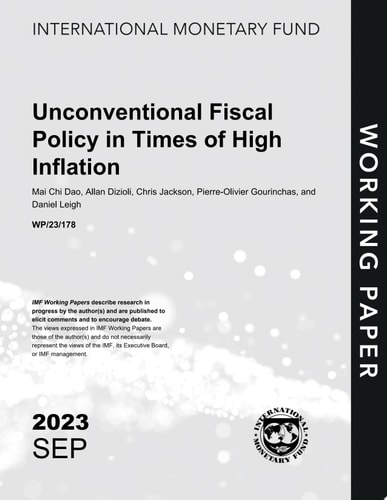
Unconventional Fiscal Policy in Times of High Inflation
0
0
As an Amazon Associate and affiliate partner, Menrva Books earns from qualifying purchases. Learn more
Author Description
The Surge In Energy Prices In 2022 Has Been A Defining Factor Behind The Increase In Euro Area Inflation. We Assess The Impact Of “unconventional Fiscal Policy,” Defined As The Set Of Fiscal Measures, Possibly Expansionary, Motivated By A Desire To Mute The Effects Of The Increase In Energy Prices And To Lower Inflation. Overall, We Find That These Unconventional Measures Reduced Euro Area Inflation By 1 To 2 Percentage Points In 2022 And May Avoid An Undershoot Later On. When Nonlinearities In The Phillips Curve Are Taken Into Account, The Net Effect Is To Reduce Inflation By About 0.5 Percentage Points In 2021-24, And Keep It Nearer To Its Target. About One-third To One-half Of The Reduction In 2022 Reflects The Direct Effects Of The Measures On Headline Inflation, With Much Of The Remainder Reflecting The Lower Pass-through To Core Inflation. The Fiscal Measures Were Deficit-financed But Had Limited Effects On Raising Inflation By Stimulating Demand And Instead Modestly Helped To Stabilize Longer-term Inflation Expectations. Looking Ahead, The Prospective Decline In Inflation In The Euro Area Is Partly Due To Fortunate Circumstances, With Energy Prices Falling From Their 2022 Peaks And Their Pass-through Effects Fading, And With Less Economic Overheating Than In Economies Such As The United States. Implementing Similar Measures In The Face Of A More Persistent Increase In Energy Prices, Or In A More Overheated Economy, Would Have Caused A More Persistent Rise In Core Inflation. Mai Dao, Allan Dizioli, Chris Jackson, Pierre-olivier Gourinchas, Daniel Leigh.
Menrva's Summary
THE THESIS
This paper investigates the role and impact of unconventional fiscal policies implemented in the Euro Area during a period of high inflation driven by energy price surges. The authors assess measures designed to mitigate the effects of increased energy costs and reduce inflation, finding that these policies lowered Euro Area inflation by 1-2 percentage points in 2022. The analysis considers the direct effects on headline inflation, the pass-through to core inflation, and the impact on demand stimulation and inflation expectations, concluding that these deficit-financed measures modestly helped stabilize longer-term expectations.
THE SCOPE MAP
- Analysis of "unconventional fiscal policy" as measures to mute energy price effects and lower inflation.
- Assessment of the impact of these policies on Euro Area inflation in 2022 (1-2 percentage points reduction).
- Consideration of nonlinearities in the Phillips Curve and their effect on inflation reduction (approx. 0.5 percentage points in 2021-24).
- Breakdown of the reduction in 2022: direct effects on headline inflation and lower pass-through to core inflation.
- Evaluation of the financing of these measures (deficit-financed) and their limited demand-stimulating effects.
- Examination of the impact on longer-term inflation expectations.
- Comparison with other economies (e.g., the United States) and scenarios involving more persistent energy price increases or overheated economies.
- Prospective decline in Euro Area inflation due to falling energy prices and less economic overheating compared to other regions.
THE AUTHORITY PERSPECTIVE
The analysis presented in this paper suggests that unconventional fiscal policies played a significant role in moderating inflation within the Euro Area during the 2022 energy price surge. The findings indicate that these measures effectively reduced headline inflation and, to a lesser extent, core inflation, while also helping to stabilize inflation expectations. The authors differentiate the Euro Area's situation from other economies, noting that similar measures in different contexts could yield different results.
Page Count:
61
Publication Date:
2023-09-01
Publisher:
International Monetary Fund
ISBN-13:
9798400251399
Economics
Politics
Non-Fiction
Finance
Community Tags
Similar Books