
Facilitation Techniques in Therapeutic Recreation
0
0
As an Amazon Associate and affiliate partner, Menrva Books earns from qualifying purchases. Learn more
Author Description
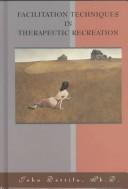
The model on the book cover depicts a way to categorize various facilitation techniques. The model identifies the “Goals” of therapeutic recreation to achieve psychological and physical health and well-being and to ensure people experience leisure and flourish as highlighted in the center circle. As indicated in the “Details” section in the middle of the model, a way to increase understanding of techniques contained in this book is to provide information about: definitions of terms, descriptions of programs documented in the literature, history of techniques, theories describing and supporting their use, research examining their effectiveness, case studies demonstrating their use, and engaging in intervention implementation exercises. We use therapeutic recreation facilitation techniques to reduce people’s leisure “Barriers” associated with power, psychological perspectives, social conditions, or physical contexts indicated by the darker circles. Since power is a result of human interactions involving active engagement in social networks that involve discourse occurring anywhere in which people make choices, some contexts might result from people experiencing freedom and well-being while engaged in leisure; however, barriers occur in other situations when leisure ties with experiences of exclusion, suffering, and discrimination. Also, many people experience sociological barriers involving negative attitudes associated with stigmatization and alienation that limit their ability to experience leisure and play. Psychological barriers prevent various people from experiencing subjective well-being that strongly connects to leisure. People also encounter physical challenges to experiencing leisure associated with access, such as accessibility of travel services and tourism. The “Facilitation Techniques” in this book cluster into four major areas located in the stars on the four corners of the model. Several techniques focus on education an adaptation including lei
Page Count:
336
Publication Date:
2022-01-01
Publisher:
Sagamore Publishing LLC
ISBN-10:
1952815681
ISBN-13:
9781952815683
Community Tags
Other Editions(2)
Reader Comments
Share Your Thoughts
No comments yet. Be the first to share your thoughts!