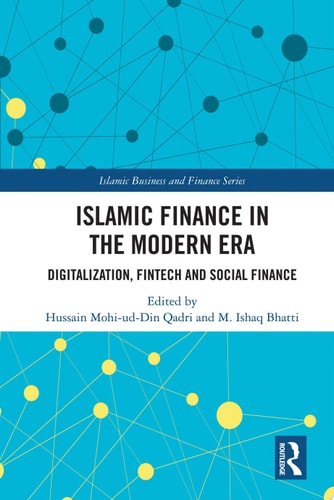
Islamic Finance in the Modern Era: Digitalization, FinTech and Social Finance
0
0
As an Amazon Associate and affiliate partner, Menrva Books earns from qualifying purchases. Learn more
Author Description
This book focuses on recent developments in financial technology: specifically, how FinTech affects the Islamic finance industry. It examines the challenges of Shariah compliance and explores opportunities for riba-free finance. The book describes contemporary FinTech solutions, investigating their relation to Islamic financial institutions. It outlines the current status of Islamic FinTech, arguing that it can provide Shariah-compliant innovative financial services to bridge the gap and compete with or complement conventional finance. Islamic FinTech can play a transformational role in making Islamic finance more accessible to a wide range of audiences and can also support the SME sector, which has been significantly impacted by the fallout of the COVID-19 pandemic. First, the book addresses thematic issues in Islamic finance, including its role in poverty eradication, elevating SMEs, and the Islamic digital economy. Second, it examines Shariah-compliant instruments in Islamic finance. The final part encompasses the risk profile of Islamic finance products and explores mitigation strategies. The book simultaneously presents theories, practice, and key issues, introducing new ideas and perspectives to the Islamic banking and financial community. The primary audience for the book will be researchers and scholars of Islamic economics and finance, and it will also appeal to practitioners and regulatory bodies.
Menrva's Summary
THE THESIS
This book investigates the transformative impact of digitalization and FinTech on the modern Islamic finance industry. It examines the challenges and opportunities presented by financial technology in ensuring Shariah compliance and fostering riba-free financial services. The authors explore contemporary FinTech solutions and their integration with Islamic financial institutions, arguing for their potential to democratize access to Islamic finance and support vital sectors like SMEs, particularly in the post-pandemic economic landscape.
THE SCOPE MAP
- Thematic issues in Islamic finance, including poverty eradication, SME development, and the digital economy.
- Shariah-compliant instruments within Islamic finance.
- Analysis of the risk profile of Islamic finance products and strategies for mitigation.
- Exploration of recent developments in financial technology and their specific application to the Islamic finance sector.
- Discussion on bridging the gap between Islamic finance and conventional finance through innovation.
- The role of Islamic FinTech in enhancing accessibility and serving the SME sector.
- Introduction of new ideas and perspectives for the Islamic banking and financial community.
THE AUTHORITY PERSPECTIVE
The book is positioned as a resource for researchers and scholars in Islamic economics and finance, while also aiming to engage practitioners and regulatory bodies. Its focus on contemporary issues like digitalization and FinTech suggests it addresses current trends and challenges within the industry. The structure, which covers theories, practice, and key issues, indicates a comprehensive approach to understanding the evolving landscape of Islamic finance.
Page Count:
360
Publication Date:
2024-08-16
Publisher:
Taylor & Francis
ISBN-10:
1040091652
ISBN-13:
9781040091654
Non-Fiction
Economics
Business
Islamic Studies
Finance
Technology
Community Tags
Similar Books