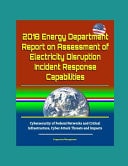
2018 Energy Department Report on Assessment of Electricity Disruption Incident Response Capabilities, Cybersecurity of Federal Networks and Critical Infrastructure, Cyber Attack Threats and Impacts
0
0
As an Amazon Associate and affiliate partner, Menrva Books earns from qualifying purchases. Learn more
Author Description
Electricity is critical to every aspect of modern life. The United States' national security, economy, and public health and safety rely on the North American electric grid every second of the day. (The terms 'electric grid', 'the grid', and 'electricity system' are used interchangeably throughout this report.) These, and many other functions powered by the grid have likely experienced local outages caused by weather, accidents, or sometimes from tree branches falling on power lines. Larger power outages, however, are infrequent occurrences, due in part to an array of organizations that work tirelessly to ensure the grid remains reliable, resilient, and secure. Nonetheless, it is neither practical nor possible to prevent all disruptive events. Grid owners and operators balance risk, investment, and cost to customers when making investments in their systems. Cybersecurity of the U.S. electric grid has emerged as one of the most important issues facing the electricity subsector today. There are key trends that are increasing the risk of significant cyber incidents. (Presidential Policy Directive 41 defines a significant cyber incident as a cyber incident (or group of related cyber incidents) likely to result in demonstrable harm to the national security interests, foreign relations, or economy of the United States or to the public confidence, civil liberties, or public health and safety of the American people.) On one hand, utilities and grid operators are adopting new technologies that leverage ever-expanding amounts of data and automated control capabilities to manage the grid more efficiently and reliably. On the other hand, cyber threat actors are becoming more knowledgeable about how to exploit various aspects of the grid infrastructure, including pathways through these new technologies, to achieve their malicious objectives. Contents * Executive Summary * Scope and Duration of a Significant Cyber Incident * U.S. Readiness to Manage Consequences * Gap in
Menrva's Summary
THE THESIS
The United States' reliance on its electricity system necessitates a robust response to disruptions, particularly those involving cybersecurity threats to federal networks and critical infrastructure. This report from the Department of Energy examines the nation's capabilities in responding to electricity disruptions, with a specific focus on the cybersecurity of federal networks and critical infrastructure. It addresses the evolving landscape of cyber attack threats, their potential impacts, and the readiness of the U.S. to manage the consequences of significant cyber incidents, as defined by Presidential Policy Directive 41.
THE SCOPE MAP
- Assessment of Electricity Disruption Incident Response Capabilities
- Analysis of Cybersecurity of Federal Networks and Critical Infrastructure
- Examination of Cyber Attack Threats and Impacts on the Electricity Subsector
- Discussion of U.S. Readiness to Manage Consequences of Significant Cyber Incidents
- Identification of Gaps in Current Preparedness and Response Frameworks
THE AUTHORITY PERSPECTIVE
This report serves as a critical assessment of the nation's preparedness for significant cyber incidents affecting the electricity sector. It highlights the increasing risks associated with the adoption of new technologies and the growing sophistication of cyber threat actors. The document aims to inform policy and strategic planning for enhancing the resilience and security of the U.S. electric grid against a range of potential disruptions.
Page Count:
92
Publication Date:
2018-06-03
Publisher:
Amazon Digital Services LLC - KDP Print US
ISBN-10:
198306498X
ISBN-13:
9781983064982
Science & Technology
Non-Fiction
Cybersecurity
Energy policy
Government Reports
Community Tags
Similar Books








Reader Comments
Share Your Thoughts
No comments yet. Be the first to share your thoughts!