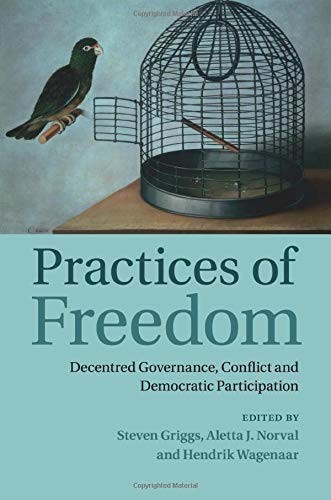
Practices of Freedom
0
0
As an Amazon Associate and affiliate partner, Menrva Books earns from qualifying purchases. Learn more
Author Description
The shift from government to governance has become a starting point for many studies of contemporary policy-making and democracy. Practices of Freedom takes a different approach, calling into question this dominant narrative and taking the variety, hybridity and dispersion of social and political practices as its focus of analysis. Bringing together leading scholars in democratic theory and critical policy studies, it draws upon new understandings of radical democracy, practice and interpretative analysis to emphasise the productive role of actors and political conflict in the formation and reproduction of contemporary forms of democratic governance. Integrating theoretical dialogues with detailed empirical studies, this book examines spaces for democratisation, institutional design, democratic criteria and learning, whilst mobilising the frameworks of agonistic and aversive democracy, informality and decentred legitimacy in cases from youth engagement to the Israeli-Palestinian conflict
Menrva's Summary
THE THESIS
This book challenges the conventional understanding of the shift from government to governance by focusing on the variety, hybridity, and dispersion of social and political practices. It brings together leading scholars in democratic theory and critical policy studies to analyze contemporary forms of democratic governance. The work emphasizes the productive role of actors and political conflict in shaping these forms, drawing on new understandings of radical democracy, practice, and interpretative analysis. The book integrates theoretical discussions with empirical studies to examine spaces for democratization, institutional design, and democratic learning.
THE SCOPE MAP
- Analysis of the shift from government to governance and its limitations.
- Focus on the variety, hybridity, and dispersion of social and political practices.
- Contributions from leading scholars in democratic theory and critical policy studies.
- Application of new understandings of radical democracy, practice, and interpretative analysis.
- Emphasis on the role of actors and political conflict in democratic formation.
- Integration of theoretical dialogues with detailed empirical studies.
- Examination of spaces for democratization and institutional design.
- Mobilization of frameworks such as agonistic and aversive democracy, informality, and decentred legitimacy.
THE AUTHORITY PERSPECTIVE
The book is positioned as a significant contribution to studies of contemporary policy-making and democracy, offering a critical perspective on the dominant narrative of the shift from government to governance. It is likely to appeal to academics and students in political science, democratic theory, and policy studies. The integration of theoretical frameworks with empirical case studies suggests a text that is both intellectually rigorous and grounded in real-world examples. The focus on agonistic and aversive democracy, informality, and decentred legitimacy indicates a contemporary and nuanced approach to understanding democratic challenges.
Page Count:
332
Publication Date:
2016-01-01
ISBN-10:
1107628326
ISBN-13:
9781107628328
Non-Fiction
Philosophy
Politics
History
Democracy
Social Theory
Policy Studies
Governance
Community Tags
Similar Books