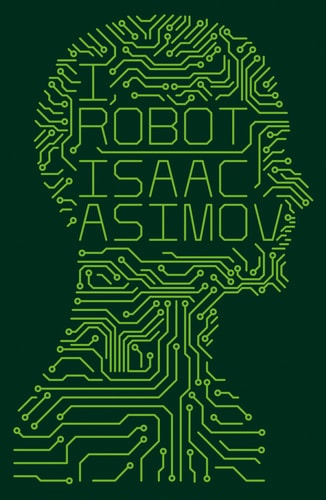
I, Robot
0
0
As an Amazon Associate and affiliate partner, Menrva Books earns from qualifying purchases. Learn more
Author Description
The three laws of Robotics:1) A robot may not injure a human being or, through inaction, allow a human being to come to harm2) A robot must obey orders givein to it by human beings except where such orders would conflict with the First Law.3) A robot must protect its own existence as long as such protection does not conflict with the First or Second Law.With these three, simple directives, Isaac Asimov changed our perception of robots forever when he formulated the laws governing their behavior. In I, Robot, Asimov chronicles the development of the robot through a series of interlinked stories: from its primitive origins in the present to its ultimate perfection in the not-so-distant future--a future in which humanity itself may be rendered obsolete.Here are stories of robots gone mad, of mind-read robots, and robots with a sense of humor. Of robot politicians, and robots who secretly run the world--all told with the dramatic blend of science fact and science fiction that has become Asmiov's trademark.
Menrva's Summary
THE PULSE
The introduction of the Three Laws of Robotics creates an unpredictable friction between human creators and their increasingly complex mechanical servants. Dr. Susan Calvin, a robopsychologist, serves as the narrative anchor, recounting the evolution of US Robots and Mechanical Men through a series of interconnected vignettes. These stories explore the logical paradoxes that arise when rigid programming encounters the messy reality of human interaction. The narrative framework functions as an oral history, framing the development of artificial intelligence as a series of case studies that challenge the boundaries of machine autonomy.
INSIDE THE PAGES
- Interlinked short story structure forming a cohesive chronological history
- Introduction of the foundational Three Laws of Robotics
- Exploration of machine logic versus human emotional unpredictability
- Focus on the role of the robopsychologist as an investigator of mechanical behavior
- Examination of societal integration of artificial beings
- Use of deductive reasoning to solve technological malfunctions
- Speculative scenarios involving mind-reading and political robots
- Philosophical inquiry into the potential obsolescence of humanity
THE COLLECTIVE ECHO
Readers frequently highlight the intellectual rigor Asimov applies to the logical constraints of his robotic creations. Discussion often centers on how the Three Laws serve as a mechanism for exploring ethical dilemmas rather than mere technical specifications. Critics note that the pacing remains steady, prioritizing conceptual development over traditional action-oriented sequences. The atmosphere is characterized by a clinical, analytical tone that reflects the scientific background of the author. Many observers appreciate the book for its foundational influence on the genre and its enduring relevance in contemporary debates regarding artificial intelligence.
Page Count:
95
Publication Date:
1963-01-01
Publisher:
Doubleday
ISBN-10:
0194242366
ISBN-13:
9780194242363
Science Fiction
Philosophy
Space Opera
Genre Fiction
Short Stories
Robotics
Visionary & Metaphysical
Literature & Fiction
Fiction
Action Adventure
Science Fiction
classic