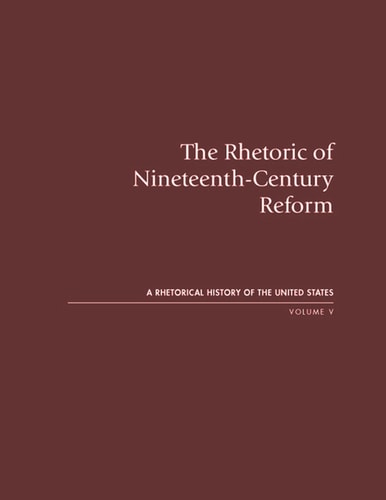
The Rhetoric of Nineteenth-Century Reform: A Rhetorical History of the United States, Volume V
0
0
As an Amazon Associate and affiliate partner, Menrva Books earns from qualifying purchases. Learn more
Author Description
The years between 1870 and 1910 were filled with dramatic social, political and economic changes in the United States. In response, public discourse of the "Gilded Age" often drew on the tenets of Social Darwinism. The application of oversimplified Darwinian principles to social issues exerted a powerful influence on the discourse of the era. While the principles were used to support arguments for social changes that envisioned a gradual evolution of a species toward greater perfection, such as women's suffrage, they were also used to oppress African Americans, who were not, it was thought by many in powerful positions, as highly "evolved" as white Americans. The ideas of social Darwinism accorded well with American beliefs that were derived from Puritanism, especially the idea that anyone could enjoy economic success if only she or he worked hard enough. This volume explores how that theme permeated public advocacy during the Gilded Age.
Menrva's Summary
THE THESIS
This volume investigates the pervasive influence of Social Darwinism on public discourse and reform movements in the United States between 1870 and 1910. The Gilded Age was a period of profound social, political, and economic transformation, during which the tenets of Social Darwinism were frequently invoked to justify both progressive social changes, such as women's suffrage, and oppressive ideologies targeting African Americans. The book explores how these oversimplified Darwinian principles intersected with existing American beliefs, particularly those derived from Puritanism regarding hard work and economic success, to shape the advocacy of the era.
THE SCOPE MAP
- Analysis of the application of Social Darwinism to social issues during the Gilded Age (1870-1910).
- Exploration of how Social Darwinist ideas were used to support arguments for women's suffrage.
- Examination of the use of Social Darwinism to oppress African Americans.
- Discussion of the intersection of Social Darwinism with American Puritanical beliefs about hard work and success.
- Focus on the rhetoric and public discourse surrounding reform movements of the period.
- Case studies illustrating the pervasive influence of these themes in public advocacy.
THE AUTHORITY PERSPECTIVE
This volume appears to offer a focused examination of a critical period in American history, analyzing the complex interplay between scientific theory and social policy. The subject matter suggests a dense, academic text likely intended for scholars and students of American history, sociology, and rhetoric. Its exploration of Social Darwinism's dual application—as a tool for progress and oppression—points to a nuanced and critical perspective on the era's reform movements.
Page Count:
433
Publication Date:
2008-06-23
Publisher:
Michigan State University Press
ISBN-10:
0870138367
ISBN-13:
9780870138362
History
Non-Fiction
Rhetoric
Gilded Age
Social History
Community Tags
Similar Books