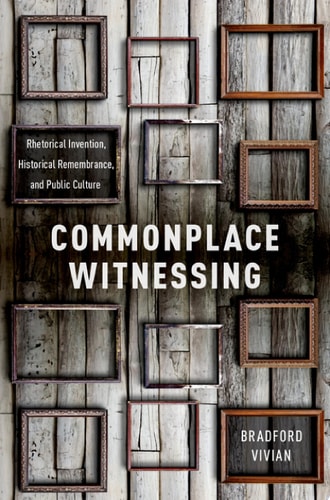
Commonplace Witnessing
0
0
As an Amazon Associate and affiliate partner, Menrva Books earns from qualifying purchases. Learn more
Author Description
Commonplace Witnessing Examines How Citizens, Politicians, And Civic Institutions Have Adopted Idioms Of Witnessing In Recent Decades To Serve A Variety Of Social, Political, And Moral Ends. The Book Encourages Us To Continue Expanding And Diversifying Our Normative Assumptions About Which Historical Subjects Bear Witness And How They Do So. Commonplace Witnessing Presupposes That Witnessing In Modern Public Culture Is A Broad And Inclusive Rhetorical Act; That Many Different Types Of Historical Subjects Now Think And Speak Of Themselves As Witnesses; And That The Rhetoric Of Witnessing Can Be Mundane, Formulaic, Or Popular Instead Of Rare And Refined. This Study Builds Upon Previous Literary, Philosophical, Psychoanalytic, And Theological Studies Of Its Subject Matter In Order To Analyze Witnessing, Instead, As A Commonplace Form Of Communication And As A Prevalent Mode Of Influence Regarding The Putative Realities And Lessons Of Historical Injustice Or Tragedy. It Thus Weighs Both The Uses And Disadvantages Of Witnessing As An Ordinary Feature Of Modern Public Life.
Menrva's Summary
THE THESIS
How has the act of witnessing evolved from a rare, moral imperative into a commonplace, formulaic rhetorical strategy in modern public discourse? Bradford Vivian, a scholar of rhetoric and communication, investigates the democratization of the witness identity in contemporary society. By synthesizing perspectives from philosophy, psychoanalysis, and political theory, the author argues that witnessing has become a pervasive mode of influence used by citizens and institutions to frame historical injustice and tragedy. The work examines the tension between the moral weight traditionally associated with witnessing and its current status as a mundane, often strategic, tool of public communication.
THE SCOPE MAP
What You Will Find
- Analysis of the shift from exceptional to ordinary witnessing in public culture
- Examination of how political actors and civic institutions utilize witness idioms
- Theoretical framework integrating literary, philosophical, and theological perspectives
- Critical evaluation of the advantages and disadvantages of formulaic witnessing
Scope Limits
- Does not provide a comprehensive history of every specific historical witness movement
- Does not focus on legal or courtroom-specific definitions of witnessing
THE AUTHORITY PERSPECTIVE
Scholars in communication and rhetoric view this text as a significant contribution to the study of public memory and political discourse. Readers frequently note the academic density of the prose, which is best suited for those familiar with rhetorical theory and cultural criticism.
Page Count:
224
Publication Date:
2017-01-01
Publisher:
Oxford University Press
ISBN-10:
019061109X
ISBN-13:
9780190611095
History
Communication Studies
Sociology
Rhetoric
Community Tags
Similar Books