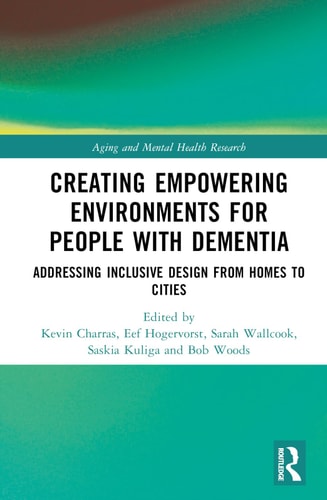
Creating Empowering Environments for People with Dementia: Addressing Inclusive Design from Homes to Cities
0
0
As an Amazon Associate and affiliate partner, Menrva Books earns from qualifying purchases. Learn more
Author Description
This edited volume addresses the environments that exacerbate, exclude, and stigmatise those living with dementia to explore designs and processes that can optimise well-being and independence. Featuring the voices and opinions of people with dementia, the chapters showcase individual homes, special dementia facilities, different forms of care homes, and public spaces, from landscape to urbanism, as examples of how to meet the needs and preferences for those living with dementia now. As a response to a recent Cochrane meta-analysis (2022) which highlighted the problems associated with using traditional, medically orientated evaluative methods for environmental design, this book demonstrates a range of research methods that can be used to inform and investigate good co-design of dementia-enabling environments. Furthermore, the book addresses cultural differences in people's needs and illustrates past, ongoing, and novel initiatives worldwide. Ultimately, this timely volume focuses on person-centred design that enables empowerment, quality of life, health, and citizenship in people living with dementia. It will be of value to researchers, scholars, and postgraduate students studying gerontology, dementia specifically, and those involved with architecture and the built environment for societal benefit more broadly.
Menrva's Summary
THE THESIS
This volume investigates how environments can either exacerbate or enable well-being and independence for individuals living with dementia. It explores designs and processes that optimize quality of life by showcasing examples from individual homes to urban landscapes. The book responds to limitations in traditional evaluative methods by presenting diverse research and co-design approaches. Ultimately, it advocates for person-centered design that fosters empowerment, health, and citizenship for people with dementia, considering global cultural differences.
THE SCOPE MAP
- Case studies of individual homes optimized for dementia.
- Analysis of special dementia facilities and various care home models.
- Exploration of public spaces, from landscapes to urban planning, for inclusivity.
- Demonstration of research methods for co-designing dementia-enabling environments.
- Discussion of cultural differences in dementia care needs.
- Examples of past, ongoing, and novel initiatives worldwide.
- Focus on person-centered design principles for empowerment and quality of life.
THE AUTHORITY PERSPECTIVE
This edited volume is positioned as a timely response to current research gaps in environmental design for dementia care. It aims to provide practical insights and methodological guidance for researchers, scholars, and practitioners in gerontology and architecture. The book's emphasis on co-design and person-centered approaches suggests a focus on user experience and empowerment. Its global perspective and inclusion of diverse environments indicate a comprehensive scope for understanding and improving the lives of people with dementia.
Page Count:
238
Publication Date:
2024-08-06
Publisher:
Routledge
ISBN-10:
1032543035
ISBN-13:
9781032543031
Health
Non-Fiction
Architecture
Dementia Care
Gerontology
urban planning
Community Tags
Similar Books