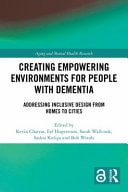
Creating Empowering Environments for People with Dementia: Addressing Inclusive Design from Homes to Cities
0
0
As an Amazon Associate and affiliate partner, Menrva Books earns from qualifying purchases. Learn more
Author Description
This edited volume addresses the environments that exacerbate, exclude, and stigmatise those living with dementia to explore designs and processes that can optimise well-being and independence. Featuring the voices and opinions of people with dementia, the chapters showcase individual homes, special dementia facilities, different forms of care homes and public spaces, from landscape to urbanism, as examples of how to meet the needs and preferences for those living with dementia now. As a response to a recent Cochrane meta-analysis (2022) which highlighted the problems associated with using traditional, medically orientated evaluative methods for environmental design, this book demonstrates a range of research methods that can be used to inform and investigate good co-design of dementia-enabling environments. Furthermore, the book addresses cultural differences in people's needs and illustrates past, ongoing and novel initiatives worldwide. Ultimately, this timely volume focuses on person-centred design that enables empowerment, quality of life, health and citizenship in people living with dementia. It will be of value to researchers, scholars, and postgraduate students studying gerontology, dementia specifically, and those involved with architecture and the built environment for societal benefit more broadly
Menrva's Summary
THE THESIS
This edited volume investigates how environments can be designed to optimize well-being and independence for individuals living with dementia. It explores designs and processes that move beyond environments that exacerbate, exclude, and stigmatize, featuring the voices of people with dementia. The chapters examine a range of settings, from individual homes and specialized facilities to care homes and public spaces, demonstrating how to meet the needs and preferences of those with dementia. The book also presents various research methods for co-designing dementia-enabling environments, responding to limitations in traditional evaluative approaches.
THE SCOPE MAP
- Exploration of individual homes designed for dementia support.
- Analysis of specialized dementia facilities and their design principles.
- Case studies of care homes and their impact on residents with dementia.
- Examination of public spaces, including landscape and urbanism, for inclusivity.
- Showcasing research methods for co-designing dementia-enabling environments.
- Discussion of cultural differences in dementia care needs worldwide.
- Focus on person-centered design for empowerment, quality of life, health, and citizenship.
THE AUTHORITY PERSPECTIVE
This volume is positioned as a valuable resource for researchers, scholars, and postgraduate students in gerontology, dementia studies, and architecture. It addresses a gap highlighted by recent meta-analyses concerning traditional evaluative methods for environmental design. The book aims to provide practical insights and research methodologies for creating supportive environments. Its focus on person-centered design and global initiatives suggests a comprehensive approach to improving the lives of people with dementia.
Page Count:
237
Publication Date:
2024-08-01
Publisher:
Routledge
ISBN-10:
1032543027
ISBN-13:
9781032543024
Architecture
Health
Non-Fiction
Dementia Care
Gerontology
Community Tags
Similar Books