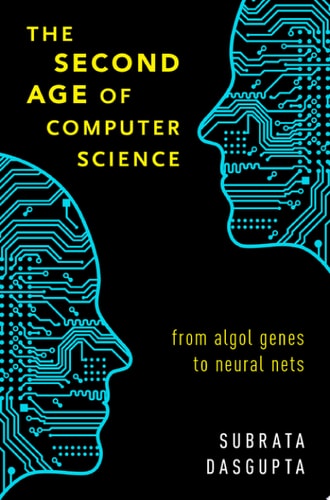
The Second Age of Computer Science: From Algol Genes to Neural Nets
0
0
As an Amazon Associate and affiliate partner, Menrva Books earns from qualifying purchases. Learn more
Author Description
Product Description By the end of the 1960s, a new discipline named computer science had come into being. A new scientific paradigm—the 'computational paradigm'—was in place, suggesting that computer science had reached a certain level of maturity. Yet as a science it was still precociously young. New forces, some technological, some socio-economic, some cognitive impinged upon it, the outcome of which was that new kinds of computational problems arose over the next two decades. Indeed, by the beginning of the 1990's the structure of the computational paradigm looked markedly different in many important respects from how it was at the end of the 1960s. Author Subrata Dasgupta named the two decades from 1970 to 1990 as the second age of computer science to distinguish it from the preceding genesis of the science and the age of the Internet/World Wide Web that followed. This book describes the evolution of computer science in this second age in the form of seven overlapping, intermingling, parallel histories that unfold concurrently in the course of the two decades. About the Author Subrata Dasgupta is a scholar, teacher, and writer. He holds the Computer Science Trust Fund Eminent Scholar Chair in the School of Computing & Informatics at the University of Louisiana at Lafayette. For the past thirty years he has studied and written on the historical, philosophical, and cognitive nature of creativity in various fields including computer science, design, technology, art, natural science, and intellectual movements. He is the author of many books, including It Began with Babbage and Computer Science: A Very Short Introduction.
Page Count:
1
Publication Date:
2021-03-01
Publisher:
Highbridge Audio and Blackstone Publishing
ISBN-10:
1665132612
ISBN-13:
9781665132619