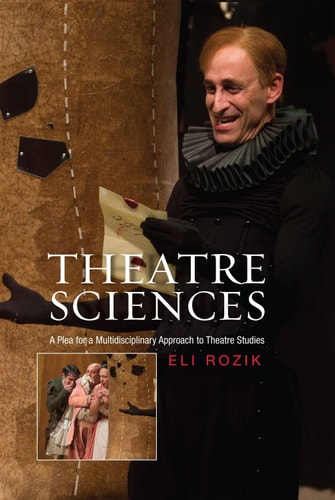
Theatre Sciences: A Plea for a Multidisciplinary Approach to Theatre Studies
0
0
As an Amazon Associate and affiliate partner, Menrva Books earns from qualifying purchases. Learn more
Author Description
Traditional theatre semiotics promoted a scientific approach to theatre studies, albeit viewing semiotics as the unique discipline of research. Theatre Sciences: A Plea for a Multidisciplinary Approach to Theatre Studies suggests instead a multi-disciplinary approach, including the following theoretical disciplines: narratology, mythology, pragmatics, ethics, theatre irony, theory of genres, aesthetics, semiotics, theory of non-verbal figures of speech, rhetoric, psychoanalysis, reception theory, history, and sociology -- with semiotics being only one among equals. These disciplines are presented from the perspective of their possible contributions to a sound methodology of theatre-texts analysis. Traditional theatre semiotics, moreover, holds the view that the actual performance on stage is the genuine text of theatre, instead of the play-script. Despite this paradigmatic shift, however, this viewpoint has failed to produce commendable analyses of such texts. The alternative presupposition put forward in this volume entails a series of novel perceptions of the theatre-text and its possible impact on the experiencing spectator, whose role in reading, interpreting and experiencing the theatre-text is not less crucial than that of the text itself. This view presupposes that the theatre-text is a description of a fictional world generated by the theatre medium. The author also contests the age-old view that a theatre/fictional-text reflects a simple narrative structure, and suggests instead a complexity that consists of seven layers: personified, mythical, praxical, naive, ironic, modal and aesthetic -- with each one of them re-structuring the previous layer. Professor Rozik also presents and describes a semiotic layer that lends communicative capacity to the description of a fictional world, and two additional metaphoric and rhetoric layers, which structure the theatre experience. The underlying purpose is to illustrate the application of the aforementioned discipline
Menrva's Summary
THE THESIS
This book argues for a fundamental shift in how theatre studies are approached, advocating for a multidisciplinary methodology over a singular semiotic focus. It posits that a robust analysis of theatre texts requires integrating insights from a wide array of theoretical disciplines, including narratology, mythology, ethics, aesthetics, psychoanalysis, history, and sociology, with semiotics serving as one component among many. The work challenges the traditional view that only the live performance constitutes the authentic theatre text, proposing instead that the play-script and its description of a fictional world are central to understanding the spectator's experience. The author introduces a novel framework for analyzing theatre texts, moving beyond simple narrative structures to a complex, seven-layered model.
THE SCOPE MAP
- Integration of diverse theoretical disciplines: narratology, mythology, pragmatics, ethics, theatre irony, theory of genres, aesthetics, semiotics, theory of non-verbal figures of speech, rhetoric, psychoanalysis, reception theory, history, and sociology.
- A critique of traditional theatre semiotics and its exclusive focus on performance as the sole theatre text.
- A proposed alternative: the theatre-text as a description of a fictional world generated by the theatre medium.
- A novel, seven-layered model for analyzing theatre texts: personified, mythical, praxical, naive, ironic, modal, and aesthetic.
- Exploration of semiotic, metaphoric, and rhetoric layers that contribute to the communicative capacity and structure of the theatre experience.
- Focus on the spectator's role in reading, interpreting, and experiencing the theatre-text.
THE AUTHORITY PERSPECTIVE
The book is presented as a scholarly work that aims to redefine the methodological foundations of theatre studies. It challenges established paradigms within theatre semiotics by advocating for a broader, interdisciplinary approach. The author's detailed proposal for a layered analysis of theatre texts suggests a dense, academic read intended for scholars and advanced students in the field. The work's emphasis on integrating multiple theoretical frameworks points to its potential to stimulate debate and offer new analytical tools for understanding dramatic literature and performance.
Page Count:
324
Publication Date:
2014-01-01
Publisher:
Sussex Academic Press
ISBN-10:
1845196287
ISBN-13:
9781845196288
Non-Fiction
Action
Semiotics
Theatre studies
Literary theory
Community Tags
Similar Books