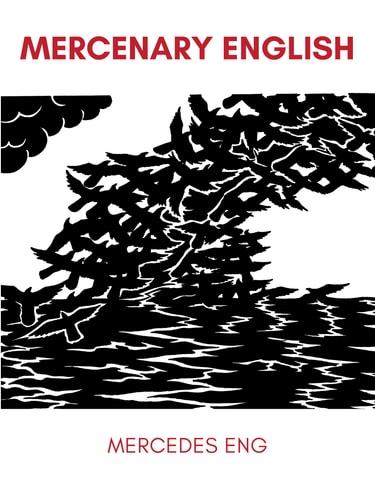
Mercenary English
0
0
As an Amazon Associate and affiliate partner, Menrva Books earns from qualifying purchases. Learn more
Author Description
Mercenary English is a long poem that documents the author's lived experience of the survival sex trade in Vancouver's Downtown Eastside in the 1990s, using her time in the trade as a subversionary critical lens for exploring the physical, structural, and discursive violence of colonialism against Indigenous women and women of colour in its various instantiations. In its strident and unsettling debut, Mercenary English seized "the politics of language" from the usual handlers and reassigned them to new terrains: the colonial battlefield, the racialized/radicalized body, and the insurgent neighbourhood. Resonating in the streets and in the classroom, the book had been taught at postsecondary institutions across North America both as poetry and decolonial theory. Now in its third reprint, the book seizes its own critical frames through the inclusion of Eng's most recent iteration of "how it is", an ongoing poem-as-map; a new afterword on gentrification in the Downtown Eastside, the neighborhood Eng called home for two decades; and an expansive conversation with poet and critic Fred Moten.
Menrva's Summary
THE PULSE
A long poem documents the author's lived experience in Vancouver's survival sex trade of the 1990s, using it as a lens to explore colonial violence against Indigenous women and women of colour. The work subverts traditional language politics, reassigning them to the colonial battlefield, the racialized body, and the insurgent neighborhood. The narrative framework is that of a poem-as-map, with the text itself charting the author's experiences and critical analyses. The book confronts the physical, structural, and discursive violence inherent in colonialism.
INSIDE THE PAGES
- Exploration of the survival sex trade in Vancouver's Downtown Eastside during the 1990s.
- Subversionary critical lens on the physical, structural, and discursive violence of colonialism.
- Focus on Indigenous women and women of colour within the context of colonial violence.
- Reassignment of 'the politics of language' to new terrains: colonial battlefield, racialized/radicalized body, insurgent neighborhood.
- Inclusion of an ongoing poem-as-map charting the author's experiences.
- New afterword on gentrification in the Downtown Eastside.
- Expansive conversation with poet and critic Fred Moten.
THE COLLECTIVE ECHO
Mercenary English has been recognized for its strident and unsettling debut, seizing the politics of language and reassigning them to new terrains. The book has resonated in both street-level discourse and academic settings, leading to its adoption in postsecondary institutions across North America for study as both poetry and decolonial theory. Its continued relevance is underscored by its third reprint and the inclusion of new material that expands its critical frames. The added conversation with Fred Moten and the afterword on gentrification further solidify its place as a significant work in contemporary literature and decolonial studies.
Page Count:
133
Publication Date:
2019-03-05
Publisher:
Talonbooks
ISBN-10:
177201219X
ISBN-13:
9781772012194
Poetry
Literary Fiction
Canadian
Social Issues
Feminism
Community Tags
Similar Books