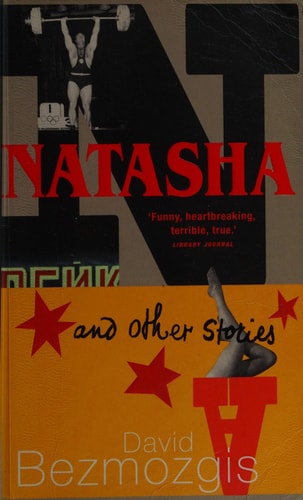
Natasha and Other Stories
0
0
As an Amazon Associate and affiliate partner, Menrva Books earns from qualifying purchases. Learn more
Author Description
David Bezmozgis became an overnight star when he published stories in the holy trinity of American magazines for fiction The New Yorker, Harper's, and Zoetrope. With the publication of his first book, Natasha, he has been compared to Chekhov and Philip Roth, and the comparison is more than just promotional copy. Natasha follows the experiences of a family of Russian Jews who settle in Toronto and set about reinventing themselves. The loosely connected stories are narrated by the son, Mark, who attempts to understand not only his new world but also his parents. As the book progresses, his growth into the frustrations of adolescence mirrors his family's disappointments as they attempt to escape their old lives in the immigrant ghetto and create new identities. Bezmozgis calls the stories "autobiographical fiction," as they are largely inspired by his own family's past, but make no mistake, these are fully realized works of literature, complete with an attention to language and an eye for detail that invoke the best of minimalist writing. Bezmozgis doesn't reinvent the form here--he sticks to traditional themes such as the search for self and cultural dislocation--but he tells his stories with a grace and quiet sensitivity that's so rare these days it's practically an endangered species. And there are a couple of literary masterpieces in Natasha. The title story, which relates Mark's sexual experimentation with a cousin by marriage during a summer spent dealing drugs, manages to be both a touching coming-of-age tale and one of the freshest inversions of the suburban dream in years. "The Second Strongest Man," a story of the reunion of Mark's family with a Russian weightlifter, manages to conflate the decline of the Russia with the emptiness of North American life in its tale of aging men whose time has passed them by. Bezmozgis divides his time between Canada and the U.S., but Natasha is international in the scope of its subjects--modern Russia, Toronto's immigrant com
Menrva's Summary
THE PULSE
A young boy navigates the complexities of his family's immigrant experience in Toronto while attempting to reconcile his own burgeoning identity with his parents' past. Through the eyes of the narrator, Mark, the reader observes the friction between the expectations of a new life in Canada and the lingering shadows of the family's Russian origins. The narrative framework utilizes a series of loosely connected stories that track Mark's progression from childhood into the frustrations of adolescence. These stories are constrained by the physical reality of the immigrant ghetto and the logical weight of cultural dislocation, forcing the characters to constantly negotiate their sense of self against the backdrop of their new environment.
INSIDE THE PAGES
- First-person narration providing a consistent perspective across disparate events
- Autobiographical fiction elements rooted in the author's own family history
- Minimalist prose style emphasizing precise language and observational detail
- Exploration of the tension between traditional Russian values and North American life
- Focus on the psychological development of the protagonist during his formative years
- Thematic examination of cultural displacement and the reinvention of identity
- Use of specific, grounded settings to anchor the emotional weight of the stories
- Intergenerational conflict depicted through the lens of the immigrant experience
THE COLLECTIVE ECHO
This collection is widely regarded for its sharp observational power and its ability to capture the nuances of the immigrant experience with restraint. Critics often highlight the author's capacity to balance the specificities of the Russian-Jewish diaspora in Toronto with universal themes of growth and disillusionment. The prose is frequently noted for its clarity and its adherence to traditional narrative structures that prioritize character depth over stylistic artifice. Readers and reviewers alike have pointed to the title story as a particularly effective example of the author's ability to subvert suburban tropes while maintaining a grounded, human perspective.
Page Count:
147
Publication Date:
2004-01-01
Publisher:
Farrar Straus & Giroux
ISBN-10:
0002005689
ISBN-13:
9780002005685
Literary Fiction
Contemporary
Coming of Age
Short Stories
Jews
Latvia
Canadian
Literature & Fiction
World Literature
Community Tags
Other Editions(6)

Similar Books






Reader Comments
Share Your Thoughts
No comments yet. Be the first to share your thoughts!