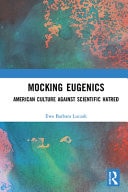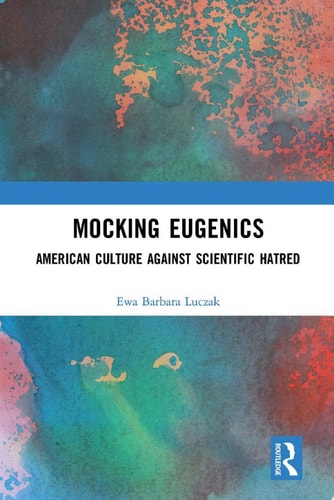
Mocking Eugenics
0
0
As an Amazon Associate and affiliate partner, Menrva Books earns from qualifying purchases. Learn more
Author Description
Mocking Eugenics explores the opposition to eugenic discourse mounted by twentieth-century American artists seeking to challenge and destabilize what they viewed as a dangerous body of thought. Focusing on their wielding of humor to attack the contemporaneous science of heredity and the totalitarian impulse informing it, this book confronts the conflict between eugenic theories presented as grounded in scientific and metaphysical truth and the satirical treatment of eugenics as not only absurdly illogical but also antithetical to democratic ideals and inimical to humanistic values. Through analyses of the films of Charlie Chaplin and the fiction of F. Scott Fitzgerald, Ernest Hemingway, Anita Loos, and Wallace Thurman, Mocking Eugenics examines their use of laughter to dismantle the rhetoric of perfectionism, white supremacy, and nativism that shaped mainstream expressions of American patriotism and normative white masculinity. As such, it will appeal to scholars of cultural studies, literature, cinema, sociology, humor, and American studies.
Menrva's Summary
THE THESIS
This book investigates the use of humor by twentieth-century American artists to subvert and critique the pervasive eugenic discourse of their time. Ewa B. Luczak examines how artists like Charlie Chaplin, F. Scott Fitzgerald, Ernest Hemingway, Anita Loos, and Wallace Thurman employed satire to challenge the scientific and totalitarian underpinnings of eugenics. The work contrasts eugenic theories, presented as objective truths, with the artists' portrayal of eugenics as illogical and detrimental to democratic and humanistic values. Through detailed analyses, the book demonstrates how laughter was used to dismantle the rhetoric of perfectionism, white supremacy, and nativism embedded in American patriotism and white masculinity.
THE SCOPE MAP
- Exploration of opposition to eugenic discourse by twentieth-century American artists.
- Focus on the use of humor to challenge eugenic theories and their totalitarian impulses.
- Analysis of the conflict between eugenics as scientific truth and its satirical treatment.
- Examination of films by Charlie Chaplin.
- Analysis of fiction by F. Scott Fitzgerald, Ernest Hemingway, Anita Loos, and Wallace Thurman.
- Dismantling of rhetoric concerning perfectionism, white supremacy, and nativism.
- Connection to American patriotism and normative white masculinity.
THE AUTHORITY PERSPECTIVE
The book is positioned as a resource for scholars in cultural studies, literature, cinema, sociology, humor, and American studies, suggesting its academic rigor and specialized focus. Its approach of using artistic satire to critique a dangerous ideology implies a nuanced and critical perspective on historical social movements. The detailed examination of specific artists and their works indicates a deep dive into primary source material and cultural context. The book's exploration of humor as a tool for social critique points to its potential to offer fresh insights into both artistic expression and the history of eugenics.
Page Count:
186
Publication Date:
2021-07-28
Publisher:
Taylor & Francis
ISBN-10:
1000416240
ISBN-13:
9781000416244
Humor
Non-Fiction
Cinema
American Studies
Sociology
Literature
Community Tags
Similar Books