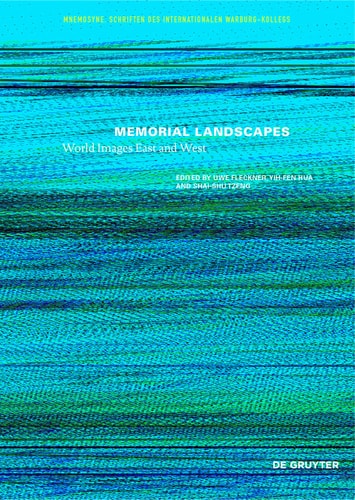
Memorial Landscapes: World Images East and West
0
0
As an Amazon Associate and affiliate partner, Menrva Books earns from qualifying purchases. Learn more
Author Description
As an everyday fact and an object of artistic design, landscape is a central category of human experience. Political, social, cartographic, and economic, but also philosophical and aesthetic references define historically changing concepts of landscape, which are considered here from both a Western and Asian perspective. Nature is staged as a space of experience in artworks, and the "memorial landscapes" thus created are examined based on examples of Asian, European, and American painting from the Middle Ages to the modern age. A look is thus taken at aspects of the formation of national and cultural identity, the transnational transfer of concepts of landscape, and political, religious, and legal, as well as medical references.
Menrva's Summary
THE THESIS
This book investigates the multifaceted concept of landscape as a central category of human experience, examining its artistic design and its philosophical, aesthetic, and socio-political dimensions. It explores how landscape is staged as a space of experience in artworks, creating
THE SCOPE MAP
- Exploration of Western and Asian perspectives on landscape concepts.
- Analysis of 'memorial landscapes' in painting from the Middle Ages to modern age.
- Examination of Asian, European, and American painting examples.
- Discussion of the formation of national and cultural identity through landscape.
- Investigation of transnational transfer of landscape concepts.
- Analysis of political, religious, legal, and medical references within landscape art.
THE AUTHORITY PERSPECTIVE
The book approaches the concept of landscape through a comparative lens, integrating Western and Asian artistic traditions. Its interdisciplinary scope suggests a text that will appeal to scholars and students of art history, cultural studies, and comparative literature. The focus on identity formation and transnational concepts indicates a nuanced exploration of how landscapes are represented and understood across different cultures and historical periods.
Page Count:
350
Publication Date:
2020-01-01
Publisher:
De Gruyter
ISBN-10:
3110656469
ISBN-13:
9783110656466
History
Non-Fiction
Art
Art History
American Art
Asian Art
European Art
Community Tags
Similar Books