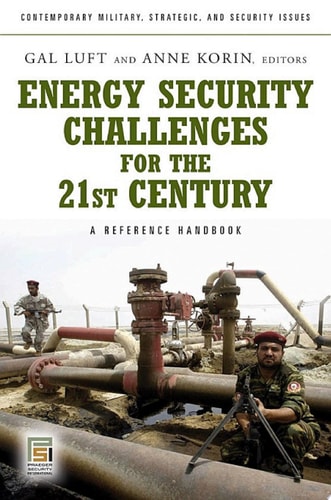
Energy Security Challenges for the 21st Century
0
0
As an Amazon Associate and affiliate partner, Menrva Books earns from qualifying purchases. Learn more
Author Description
The impact of energy on global security and economy is clear and profound, and this is why in recent years energy security has become a source of concern to most countries. However, energy security means different things to different countries based on their geographic location, their endowment of resources their strategic and economic conditions. In this book, Gal Luft and Anne Korin with the help of twenty leading experts provide an overview of the world's energy system and its vulnerabilities that underlay growing concern over energy security. It hosts a debate about the feasibility of resource conflicts and covers issues such as the threat of terrorism to the global energy system, maritime security, the role of multinationals and non-state actors in energy security, the pathways to energy security through diversification of sources and the development of alternative energy sources. It delves into the various approaches selected producers, consumers and transit states have toward energy security and examines the domestic and foreign policy tradeoffs required to ensure safe and affordable energy supply. The explains the various pathways to energy security and the tradeoffs among them and demonstrates how all these factors can be integrated in a larger foreign and domestic policy framework. It also explores the future of nuclear power, the complex relations between energy security and environmental concerns and the role for decentralized energy as a way to enhance energy security.
Menrva's Summary
THE THESIS
The 21st century faces profound challenges to energy security, impacting global stability and economies. This book, drawing on insights from Gal Luft, Anne Korin, and twenty leading experts, examines the multifaceted nature of energy security, which varies significantly by nation due to geography, resources, and geopolitical conditions. It investigates the vulnerabilities within the global energy system, including the potential for resource conflicts, the threat of terrorism, and issues of maritime security. The work also explores the roles of multinational corporations and non-state actors, and discusses pathways to energy security through diversification and alternative energy development.
THE SCOPE MAP
- Overview of the world's energy system and its inherent vulnerabilities.
- Analysis of the feasibility and implications of resource conflicts.
- Examination of the threat of terrorism to the global energy infrastructure.
- Discussion on maritime security in the context of energy supply.
- The role of multinational corporations and non-state actors in energy security.
- Pathways to energy security through diversification of energy sources.
- Exploration of alternative energy sources and their potential.
- Analysis of producer, consumer, and transit state approaches to energy security.
THE AUTHORITY PERSPECTIVE
This comprehensive volume addresses the critical intersection of energy, security, and economics in the 21st century. It synthesizes expert perspectives to map the vulnerabilities of the global energy system and debates potential conflicts and threats, including terrorism and maritime security issues. The book further explores strategic approaches to energy security, such as diversification, alternative energy development, and the complex interplay with environmental concerns. It offers a framework for integrating these factors into domestic and foreign policy, providing a thorough examination for policymakers and academics.
Page Count:
388
Publication Date:
2009-08-10
Publisher:
Bloomsbury USA
ISBN-13:
9798216079736
Politics
Economics
Non-Fiction
International relations
Energy security
Terrorism
Community Tags
Similar Books