Beggar's Opera
0
0
As an Amazon Associate and affiliate partner, Menrva Books earns from qualifying purchases. Learn more
Author Description
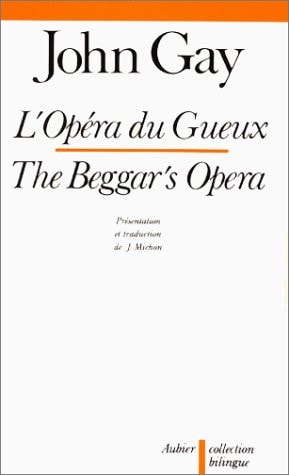
The Beggar's Opera is a ballad opera in three acts by John Gay with music arranged by John Christopher Pepusch. A ballad opera is a theatrical genre of comic opera that was popular in the English-speaking world during the 18th century. It is made up of mostly new songs that continue to be sung in the musical numbers of the opera, and the numbers of the characters of the opera are spoken or recited. The Beggar's Opera was first performed on 29 January 1728 at the Lincoln's Inn Fields theatre in London. It was the last show of its kind to be performed in England until the revival of the genre by Gilbert and Sullivan in the 19th century. The opera was a huge success, running for sixty-two consecutive performances and being revived many times. The Beggar's Opera is a satirical commentary on contemporary politics and society. It is also a critique of the genre of opera itself.
Menrva's Summary
THE PULSE
A cunning thief and a highwayman vie for the affections of a tavern keeper's daughter, setting the stage for a satirical exposé of society's corrupt underbelly. Macheath, a notorious highwayman, plans to marry Polly Peachum, the daughter of the formidable Mr. Peachum, who controls London's criminal underworld. However, Peachum disapproves and seeks to have Macheath arrested, while Macheath's former lover, the vengeful Lucy Lockit, daughter of the corrupt jailer, adds further complication. The play unfolds within the grimy, morally ambiguous world of London's prisons and taverns, where survival depends on wit and a willingness to betray.
INSIDE THE PAGES
- Features a cast of characters drawn from the criminal classes and the corrupt institutions of the time.
- Incorporates numerous songs with lyrics by John Gay, set to popular tunes of the era.
- Employs satire to critique the political and social corruption of 18th-century England.
- Explores themes of morality, justice, and the hypocrisy of the ruling class.
- The narrative structure follows Macheath's attempts to evade capture and his complex romantic entanglements.
- The play's language reflects the vernacular and slang of the period.
- Includes a large ensemble cast representing various strata of society, from beggars to lords.
THE COLLECTIVE ECHO
John Gay's 'Beggar's Opera' was a groundbreaking success upon its premiere, lauded for its sharp satire and its use of popular tunes. Critics and audiences alike were captivated by its audacious portrayal of criminals and its pointed commentary on the perceived corruption within the British aristocracy and government. The play's innovative blend of music and drama, along with its memorable characters, cemented its status as a classic of English theatre. Its enduring legacy lies in its ability to provoke thought and laughter through its witty and often biting social critique.
Page Count:
300
Publication Date:
1983-01-01
Publisher:
Aubier
ISBN-10:
2700703243
ISBN-13:
9782700703245
Classics
Drama
Fiction
Satire
Musical
Community Tags
Similar Books