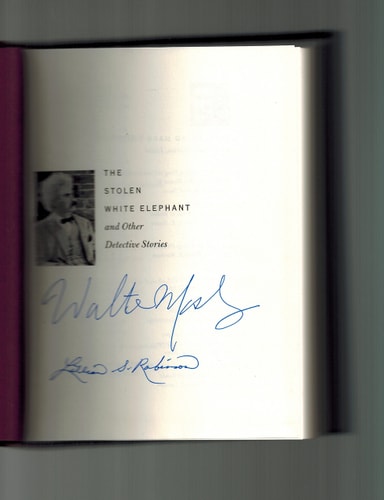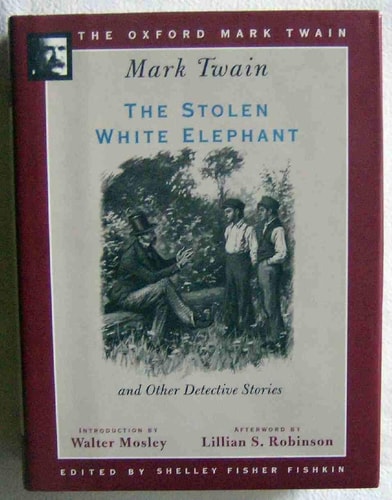
The Stolen White Elephant and Other Detective Stories
0
0
As an Amazon Associate and affiliate partner, Menrva Books earns from qualifying purchases. Learn more
Author Description
The King of Siam's decision to send the Queen of England a literal white elephant as a gift sets in motion a broad farce targeting the self-proclaimed brilliance of the corrupt and incompetent chief of New York City detectives in Twain's delightfully absurd story, "A Stolen White Elephant." In "Tom Sawyer, Detective," writes Lillian Robinson in her afterword, "Twain casts his famous Missouri adolescents, Tom and Huck, in the roles of Conan Doyle's phenomenally successful detectives, Sherlock Holmes and Dr. Watson." The story of mistaken identities, diamond thefts, and murders is set at the Phelps farm, where the final chapters of Huckleberry Finn take place. "A Double Barreled Detective Story," Twain's spoof of the mystery genre, then in its infancy, introduces the reader to Sherlock Holmes as he has never been seen before or since. Far from his usual elegant London haunts, the great detective is caught up in a melodramatic murder mystery of love, betrayal, and vengeance in a rough California mining town.
Menrva's Summary
THE PULSE
The disappearance of a royal gift triggers a chaotic investigation that exposes the ineptitude of the New York City police force. The protagonist, a high-ranking detective, attempts to recover a stolen white elephant while navigating a web of bureaucratic incompetence and absurdity. Twain utilizes a satirical framework to critique the detective genre, placing his characters in situations where logic is consistently undermined by farce. The narrative shifts between investigative procedural tropes and exaggerated social commentary to highlight the disconnect between professional reputation and actual capability.
INSIDE THE PAGES
- Satirical portrayal of law enforcement and investigative procedures
- Inclusion of iconic characters Tom Sawyer and Huckleberry Finn in detective roles
- Parody of Sherlock Holmes and the conventions of the mystery genre
- Utilization of mistaken identity as a primary plot device
- Setting shifts between rural Missouri and the California mining frontier
- Integration of melodrama and vengeance themes within a comedic structure
- Focus on the absurdity of institutional corruption
- Episodic narrative structure typical of short story collections
THE COLLECTIVE ECHO
Readers and critics frequently note that this collection serves as a sharp-witted critique of the burgeoning detective fiction genre during the late nineteenth century. Discussion often centers on Twain's ability to subvert the expectations of the reader by placing familiar characters into unfamiliar, high-stakes investigative roles. The pacing is described as brisk and humorous, favoring character-driven irony over the methodical deduction found in traditional mysteries. Many observers highlight the effectiveness of the author's satirical voice in exposing the pomposity of authority figures. The collection remains a significant study in how Twain manipulated established literary tropes to provide social commentary.
Page Count:
720
Publication Date:
1996-12-05
Publisher:
Oxford University Press
ISBN-10:
0195101537
ISBN-13:
9780195101539
Fiction
Humor
Mystery
Satire
Short Stories
classic
Tom Sawyer Fictitious character