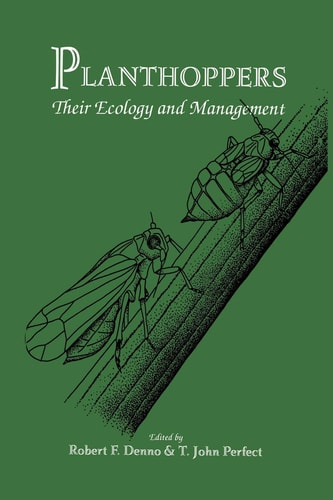
Planthoppers Their Ecology and Management
0
0
As an Amazon Associate and affiliate partner, Menrva Books earns from qualifying purchases. Learn more
Author Description
Planthoppers include some of the most devastating pests of major agricultural crops throughout the world. One species, the rice brown planthopper, is among the most economically important pests in Asia. In past decades, government policies encouraged the control of rice planthoppers with synthetic pesticides, a tactic which promoted insecticide resistance and often led to the pesticide-induced resurgence of pest populations. To deter planthopper outbreaks, a more ecologically sound management strategy is being implemented, one based on a thorough investigation of population dynamics, natural enemies, and the genetics of host plant and insecticide adaptation. In the natural habitats of North America and Europe, scientists have also used planthoppers as model organisms to test ecological and evolutionary theory. The consequence of these diverse studies is an extremely scattered literature on planthoppers that has never been synthesized from an ecological perspective. This volume summarizes what is known about planthopper ecology and biological control. It takes a theoretical approach yet is deeply concerned with the application of theory to the practical problems of pest management.
Page Count:
799
Publication Date:
2012-10-06
Publisher:
Springer US
ISBN-10:
1461360153
ISBN-13:
9781461360155
