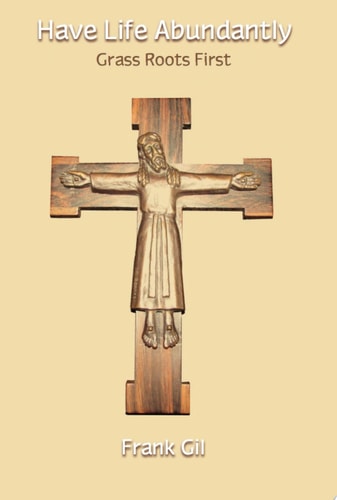
Have Life Abundantly
0
0
As an Amazon Associate and affiliate partner, Menrva Books earns from qualifying purchases. Learn more
Author Description
The world we know has been irrevocably shaped by certain major movements of massive significance: among them, the Enlightenment and Renaissance, the Industrial Revolution, the French Revolution, and the American Revolution?to say nothing of lengthened life, heightened education, and awareness of women's rights. Largely untouched by the fundamental attitude of much of these changes is the Roman Catholic Church. It is probably the only major global institution where the emphasis on a central monarchy has been steadily growing?the Roman papacy and Episcopal hierarchy. Change will inevitably come to the Church and that change will include the Roman Catholic Church. What is proposed in this book is a flexible shape that opens the way to such change, implemented immediately at grass roots. To express it simply, gatherings of the grass roots folk for clergy-free small-group Eucharist's and more rarely for small group clergy-free celebrations of reconciliation; the equivalent of current priests would focus above all on leadership in faith communities. Very basically, reality needs to be given to the priesthood of the faithful and emphasis given to the importance of leadership in faith communities. The shape that this reality and this emphasis will be given will vary enormously in each culture and society. The need for some basic underlying direction is not difficult to discern.
Menrva's Summary
THE THESIS
The Roman Catholic Church faces inevitable change, and this book proposes a flexible model for its implementation at the grassroots level. The author argues that while many global institutions have adapted to major historical movements, the Catholic Church has seen a steady increase in centralized power. This work suggests a new structure where clergy-free small groups can celebrate Eucharist and reconciliation, with priests focusing on leadership within faith communities. The core idea is to actualize the priesthood of the faithful and emphasize community leadership, with the specific form of this adaptation varying across cultures and societies.
THE SCOPE MAP
- Analysis of historical movements and their impact on global institutions versus the Roman Catholic Church.
- Critique of the growing emphasis on a central monarchy within the Church hierarchy.
- Proposal for a flexible, grassroots model for church reform.
- Concept of clergy-free small-group celebrations of Eucharist and reconciliation.
- Redefinition of the role of priests to focus on leadership in faith communities.
- Emphasis on actualizing the 'priesthood of the faithful'.
- Consideration of cultural and societal variations in implementing proposed changes.
THE AUTHORITY PERSPECTIVE
The book offers a critical perspective on the Roman Catholic Church's structure and proposes a radical, grassroots approach to reform. The author's argument centers on empowering the laity and decentralizing certain functions, suggesting a significant shift in how faith communities are led and experienced. The proposed model aims to adapt the Church to contemporary societal changes by fostering local autonomy and leadership. This work invites contemplation on the future direction of the Church and the potential for significant internal transformation.
Page Count:
161
Publication Date:
2013-06-30
Publisher:
ATF Press
ISBN-10:
1922239097
ISBN-13:
9781922239099
Non-Fiction
Religion
Christianity
Social Commentary
Community Tags
Similar Books