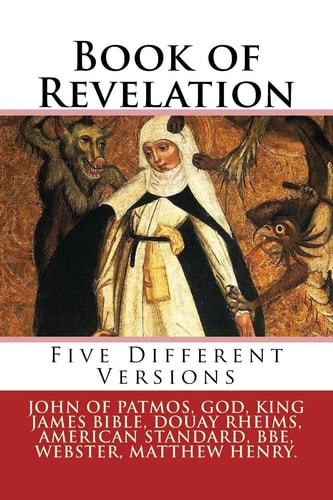
Book of Revelation
0
0
As an Amazon Associate and affiliate partner, Menrva Books earns from qualifying purchases. Learn more
Author Description
I am the Alpha and the Omega.. the one who is, who always was, and who is still to come... the Almighty." The Book of Revelation, often known simply as Revelation or the Apocalypse, is the final book of the Bible and is the only purely apocalyptic book in the New Testament. The author of the work identifies himself in the text as "John" and says that he was on Patmos, an island in the Aegean, when he was instructed by a heavenly figure to write down the contents of a vision. Most modern scholars believe it was written around AD 95, with some believing it dates from around AD 70. The book spans three literary genres: epistolary, apocalyptic, and prophetic. It begins with an epistolary address to the reader followed by an apocalyptic description of a complex series of events derived from prophetic visions which the author has seen. These include the appearance of a number of figures and images which have become important in Christian eschatology, such as the Whore of Babylon and the Beast, and culminate in the Second Coming of Jesus Christ. The obscure and extravagant imagery has led to a wide variety of interpretations: historicist interpretations see in Revelation a broad view of history; interpretations treat Revelation as mostly referring to the events of the apostolic era (1st century), or-at the latest-the fall of the Roman Empire; futurists believe that Revelation describes future events; and idealist or symbolic interpretations consider that Revelation does not refer to actual people or events, but is an allegory of the spiritual path and the ongoing struggle between good and evil. The King James Version Douay-Rheims Version The American Standard Version Bible in Basic English Version Webster Bible Version The Matthew Henry Commentary
Menrva's Summary
THE THESIS
The Book of Revelation presents a complex series of visions detailing the end times and the ultimate triumph of good over evil. The text, attributed to John of Patmos, describes apocalyptic events, symbolic figures like the Whore of Babylon and the Beast, and culminates in the Second Coming of Jesus Christ, offering a framework for understanding Christian eschatology. The work blends epistolary, apocalyptic, and prophetic literary genres, leading to diverse interpretations ranging from historical to futuristic and symbolic readings.
THE SCOPE MAP
- An epistolary introduction addressing the reader.
- Apocalyptic visions of future events and symbolic figures.
- Prophetic pronouncements concerning divine judgment and salvation.
- Key figures and imagery central to Christian eschatology, such as the Beast and the Second Coming.
- A discussion of various interpretive approaches: historicist, preterist, futurist, and idealist.
- Commentary by Matthew Henry, offering theological insights.
THE AUTHORITY PERSPECTIVE
The Book of Revelation is a foundational text in Christian theology, with its apocalyptic visions and prophecies inspiring a wide array of interpretations throughout history. Scholars debate its precise dating and literary context, with most placing its composition around AD 95. Its symbolic language has led to diverse schools of thought, including historicist, preterist, futurist, and idealist approaches, each seeking to understand its message for their respective eras. The commentary by Matthew Henry provides a specific theological lens through which to engage with the text's complex imagery and eschatological themes.
Page Count:
146
Publication Date:
2014-03-11
Publisher:
CreateSpace Independent Publishing Platform
ISBN-10:
1497321948
ISBN-13:
9781497321946
Religion
Non-Fiction
Theology
Christianity
Prophecy
Community Tags
Similar Books