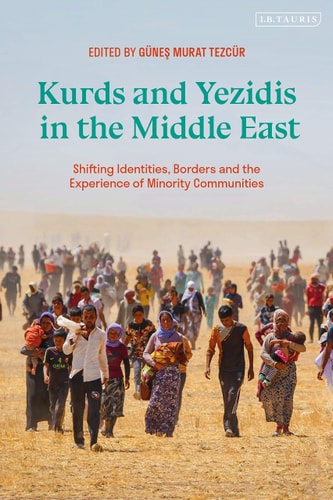
Kurds and Yezidis in the Middle East Shifting Identities, Borders, and the Experience of Minority Communities
0
0
As an Amazon Associate and affiliate partner, Menrva Books earns from qualifying purchases. Learn more
Author Description
The diversity of Kurdish communities across the Middle East is now recognized as central to understanding both the challenges and opportunities for their representation and politics. Yet little scholarship has focused on the complexities within these different groups and the range of their experiences. This book diversifies the literature on Kurdish Studies by offering close analyses of subjects which have not been adequately researched, and in particular, by highlighting the Kurds' relationship to the Yazidis. Case studies include: the political ideas of Ehmede Xani, “the father of Kurdish nationalism”; Kurdish refugees in camps in Iraq; the perception of the Kurds by Armenians in the late Ottoman Empire and the Turks in modern Western Turkey; and the important connections and shared heritage of the Kurds and the Yazidis, especially in the aftermath of the 2014 ISIS attacks. The book comprises the leading voices in Kurdish Studies and combines in-depth empirical work with theoretical and conceptual discussions to take the debates in the field in new directions. The study is divided into three thematic sections to capture new insights into the heterogeneous aspects of Kurdish history and identity. In doing so, contributors explain why we need to pay close attention to the shifting identities and the diversity of the Kurds, and what implications this has for Middle East Studies and Minority Studies more generally.
Page Count:
224
Publication Date:
2022-08-25
Publisher:
Bloomsbury Academic
ISBN-10:
0755639928
ISBN-13:
9780755639922