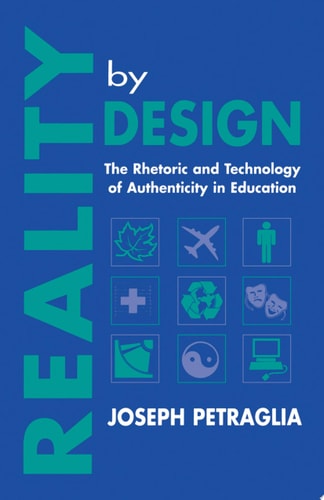
Reality By Design The Rhetoric and Technology of Authenticity in Education
0
0
As an Amazon Associate and affiliate partner, Menrva Books earns from qualifying purchases. Learn more
Author Description
In the first paragraphs of this volume, the author identifies an "authenticity paradox": that the purported real-worldedness of a learning environment, technique, or task is so rhetorically potent that educators frequently call attention to it in pedagogical conversations to legitimize their undertakings, while at the same time, terms such as "real-world" and "authentic" do not require (and even resist) precise delineation. Using the language of authenticity as a keyhole through which to view contemporary educational theory, Petraglia draws on theories of cognition, education, and knowledge to articulate the interdisciplinarity of "constructivism" and to expose the unsettling combination of constructivism's social scientific and epistemological commitments. He argues that a full-bodied embrace of constructivist theory requires that educators forgo "knowledge as we know it" and recommends a "rhetorical" approach to constructivist instruction that recognizes the cultural, social, and behavioral practices which play an enormous role in defining learners' "real worlds." Applying this critique to the field of educational technology, the author does not merely lament constructivist theory's current shortcomings, but offers a means by which these shortcomings can be engaged and, perhaps, overcome.
Page Count:
216
Publication Date:
1998-02-01
Publisher:
Routledge
ISBN-10:
1135692114
ISBN-13:
9781135692117

