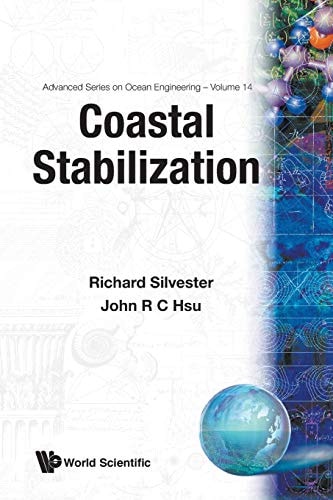
Coastal Stabilization
0
0
As an Amazon Associate and affiliate partner, Menrva Books earns from qualifying purchases. Learn more
Author Description
This book discusses coastal defense measures, which have not improved in the past few decades, and better alternatives. It emphasizes on the existence of stable bays in coastal geomorphology and their use in coastal stabilization. The conventional measures for saving beaches, such as seawalls, groins, offshore breakwaters, and renourishment, are discussed in detail, followed by an alternative known as headland control. Many types of coast, and the respective defense measures, are discussed, especially for eroding beaches downcoast of harbors with long breakwaters. The formation of offshore bars during storms is examined and the design of stable recreational beaches is demonstrated. Practical design problems are discussed in all cases. Many issues requiring attention in coastal engineering are also outlined.
Menrva's Summary
THE THESIS
This book investigates the stagnation in coastal defense strategies and proposes innovative alternatives based on geomorphological principles. The authors, John R. C. Hsu and Richard Silvester, critically examine conventional methods like seawalls and groins, highlighting their limitations. They then introduce and elaborate on headland control as a superior approach, supported by detailed case studies of various coastlines, particularly those affected by harbor structures. The work also delves into storm bar formation and the practical design considerations for creating stable recreational beaches, offering solutions for persistent coastal erosion challenges.
THE SCOPE MAP
- Detailed analysis of conventional coastal defense measures (seawalls, groins, breakwaters, renourishment).
- Introduction and in-depth discussion of headland control as an alternative strategy.
- Examination of coastal geomorphology, focusing on stable bays and their application in defense.
- Case studies of eroding beaches downcoast of harbors with long breakwaters.
- Analysis of offshore bar formation during storm events.
- Demonstration of design principles for stable recreational beaches.
- Discussion of practical design problems encountered in coastal engineering.
- Outline of key issues requiring attention in the field of coastal engineering.
THE AUTHORITY PERSPECTIVE
The book addresses a critical stagnation in coastal defense technologies, offering a detailed examination of established methods and proposing headland control as a superior alternative. It draws upon principles of coastal geomorphology and presents practical design considerations for various coastal types, including those impacted by harbor construction. The work is structured to guide engineers through complex design problems and highlight areas for future attention in coastal engineering. The comprehensive approach suggests a valuable resource for professionals and researchers in the field.
Page Count:
578
Publication Date:
1997-01-01
Publisher:
World Scientific
ISBN-10:
9810231547
ISBN-13:
9789810231545
Non-Fiction
Science
Civil Engineering
Geomorphology
Coastal Engineering
Community Tags
Similar Books