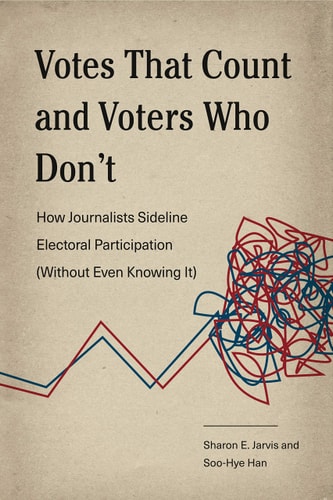
Votes That Count and Voters Who Don't: How Journalists Sideline Electoral Participation (without Even Knowing It)
0
0
As an Amazon Associate and affiliate partner, Menrva Books earns from qualifying purchases. Learn more
Author Description
For decades, journalists have called the winners of U.S. presidential elections--often in error--well before the closing of the polls. In Votes That Count and Voters Who Don't, Sharon E. Jarvis and Soo-Hye Han investigate what motivates journalists to call elections before the votes have been tallied and, more importantly, what this and similar practices signal to the electorate about the value of voter participation. Jarvis and Han track how journalists have told the story of electoral participation during the last eighteen presidential elections, revealing how the portrayal of voters in the popular press has evolved over the last half century from that of mobilized partisan actors vital to electoral outcomes to that of pawns of political elites and captives of a flawed electoral system. The authors engage with experiments and focus groups to reveal the effects that these portrayals have on voters and share their findings in interviews with prominent journalists. Votes That Count and Voters Who Don't not only explores the failings of the media but also shows how the story of electoral participation might be told in ways that support both democratic and journalistic values. At a time when professional strategists are pressuring journalists to provide favorable coverage for their causes and candidates, this book invites academics, organizations, the press, and citizens alike to advocate for the voter's place in the news.
Menrva's Summary
THE THESIS
Journalists' practices in calling U.S. presidential elections before polls close may inadvertently signal to voters that their participation is devalued. Sharon E. Jarvis and Soo-Hye Han investigate the motivations behind premature election calls and their impact on the electorate's perception of voter participation. The authors trace the portrayal of voters in the popular press across eighteen presidential elections, observing a shift from active, influential participants to passive figures manipulated by elites or systems. Through experiments, focus groups, and interviews with journalists, they analyze the effects of these media narratives and propose alternative storytelling methods that uphold democratic and journalistic values.
THE SCOPE MAP
- Analysis of journalistic practices in calling U.S. presidential elections before polls close.
- Investigation into the motivations driving premature election calls by journalists.
- Examination of how media portrayals of voters have evolved over the last half-century.
- Study of the shift in voter representation from mobilized actors to passive figures.
- Engagement with experimental data and focus group findings on media effects.
- Interviews with prominent journalists to gather professional insights.
- Discussion on how to tell the story of electoral participation to support democratic and journalistic values.
THE AUTHORITY PERSPECTIVE
The book examines how journalistic practices, particularly premature election calls, can diminish the perceived value of voter participation. It analyzes the evolution of voter portrayal in media over fifty years, moving from active participants to passive subjects. The authors utilize empirical research, including experiments and focus groups, alongside interviews with journalists to understand the impact of these narratives. The work aims to foster a discussion among academics, organizations, the press, and citizens on how to better advocate for the voter's role in news coverage.
Page Count:
194
Publication Date:
2018-01-01
Publisher:
Pennsylvania State University Press
ISBN-10:
0271081252
ISBN-13:
9780271081250
History
Non-Fiction
Politics
American Politics
Journalism
Media Studies
Community Tags
Similar Books