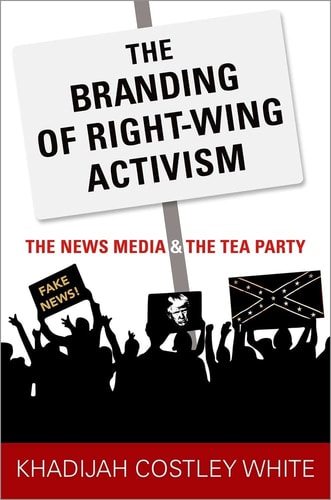
The Branding of Right-Wing Activism: The News Media and the Tea Party
0
0
As an Amazon Associate and affiliate partner, Menrva Books earns from qualifying purchases. Learn more
Author Description
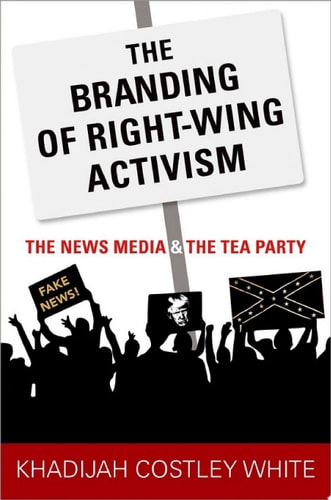
From the start of Barack Obama's presidency in 2009, conservative populist groups began fomenting political fractiousness, dissent, and surprising electoral success. The Tea Party was one of the major characters driving this story. But, as Khadijah Costley White argues in this book, the Tea Party's ascent to major political phenomenon can be attributed to the way in which partisan and non-partisan news outlets "branded" the Party as a pot-stirrer in political conflicts over race, class, and gender. In other words, the news media played a major role in developing, cultivating, and promoting populism's brand, particularly within the news spaces of commentary and opinion. Through the language of political marketing, branding, and promotion, the news media not only reported on the Tea Party, but also acted as its political strategist and brand consultant. Moreover, the conservative press acted more as a political party than a news medium, deliberately promoting the Tea Party, and aiding in organizing, headlining, and galvanizing a conservative political base around specific Tea Party candidates, values, and events. In a media environment in which everyone has the opportunity to tune out, tune in, and speak back, The Branding of Right-Wing Activism ultimately shows that distinctions between citizens, journalists, activists, politicians, celebrities, and consumers are more symbolic than concrete.
Menrva's Summary
THE THESIS
This book investigates how news media outlets functioned as political strategists and brand consultants to cultivate the Tea Party movement during the Obama presidency. Khadijah Costley White, a scholar in media and communication, utilizes a framework of political marketing and branding to analyze the symbiotic relationship between conservative populist groups and the press. She argues that news organizations did not merely report on the movement but actively participated in its development by framing it through specific narratives of race, class, and gender. The work demonstrates how the distinction between journalistic reporting and political activism blurred during this period of intense partisan polarization.
THE SCOPE MAP
What You Will Find
- Analysis of media coverage patterns from 2009 through the subsequent electoral cycles.
- Application of branding and marketing theory to political news cycles.
- Examination of the role of commentary and opinion-based news spaces.
- Case studies on how conservative media outlets acted as organizational hubs for political events.
Scope Limits
- The study focuses primarily on the American political landscape and does not extend to international populist movements.
- The analysis is limited to the specific timeframe of the Tea Party's rise and does not cover subsequent populist developments in the late 2010s.
THE AUTHORITY PERSPECTIVE
Scholars in political communication frequently cite this work for its clear application of marketing theory to the study of news media influence. Experts note that the text provides a rigorous examination of how modern media environments facilitate the growth of partisan political brands.
Page Count:
284
Publication Date:
2018-01-01
Publisher:
Oxford University Press
ISBN-10:
0190879343
ISBN-13:
9780190879341
Sociology
American Government
Mass Communication
Media Studies
Communication
Journalism
American Politics
Political activism
Community Tags
Other Editions(3)

Similar Books