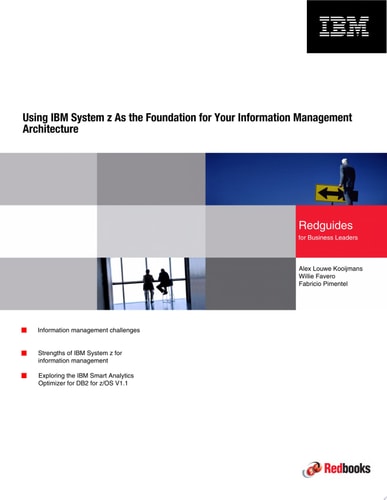
Using IBM System z As the Foundation for Your Information Management Architecture
0
0
As an Amazon Associate and affiliate partner, Menrva Books earns from qualifying purchases. Learn more
Author Description
Many companies have built data warehouses (DWs) and have embraced business intelligence (BI) and analytics solutions. Even as companies have accumulated huge amounts of data, however, it remains difficult to provide trusted information at the right time and in the right place. The amount of data collected and available throughout the enterprise continues to grow even as the complexity and urgency of receiving meaningful information continues to increase. Producing meaningful and trusted information when it is needed can only be achieved by having a proper information architecture in place and a powerful underlying infrastructure. The amounts of data to mine, cleanse, and integrate are becoming so large that increasingly the infrastructure is becoming the bottleneck. This results in low refresh rates of the data in the data warehouse and in not having the information available in time where it is needed. And even before information can become available in a BI dashboard or a report, many preceding steps must take place: the collection of raw data; integration of data from multiple data stores, business units or geographies; transformation of data from one format to another; cubing data into data cubes; and finally, loading changes to data in the data warehouse. Combining the complexity of the information requirements, the growing amounts of data, and multiple layers of the information architecture requires an extremely powerful infrastructure. This IBM® RedguideTM publication explains how you can use IBM System z® as the foundation for your information management architecture. The System z value proposition for information management is fueled by the traditional strengths of the IBM mainframe, the specific strengths of DB2® for z/OS®, and the broad functionality of the IBM information management software portfolio. For decades, System z has proven its ability to manage vast amounts of mission-critical data for many companies throughout the world.
Menrva's Summary
THE THESIS
This publication explains how to leverage IBM System z as the bedrock for an enterprise's information management architecture. The growing volume and complexity of data present significant challenges for businesses seeking to provide timely and trusted information. Traditional data warehousing and business intelligence solutions often falter due to infrastructure bottlenecks, leading to slow data refresh rates and delayed access to critical insights. This guide details how the inherent strengths of IBM System z, combined with DB2 for z/OS and IBM's information management software, can overcome these limitations.
THE SCOPE MAP
- Strategies for building robust information management architectures on IBM System z.
- The specific advantages of DB2 for z/OS in enterprise data management.
- How IBM's information management software portfolio integrates with System z.
- Addressing the challenges of data volume, integration, transformation, and loading.
- Achieving timely and trusted information delivery for business intelligence and analytics.
THE AUTHORITY PERSPECTIVE
This IBM Redguide publication is aimed at IT professionals and architects responsible for enterprise data management. It focuses on the technical aspects of leveraging IBM's mainframe technology for data warehousing and business intelligence. The content is likely to appeal to organizations already invested in the IBM ecosystem or those considering a powerful, scalable infrastructure for their information needs. The publication emphasizes the practical application of System z's capabilities to solve common data management bottlenecks.
Page Count:
60
Publication Date:
2011-04-08
Publisher:
IBM Redbooks
ISBN-10:
0738451274
ISBN-13:
9780738451275
Science & Technology
Non-Fiction
Business
Information Management
Community Tags
Similar Books









Reader Comments
Share Your Thoughts
No comments yet. Be the first to share your thoughts!