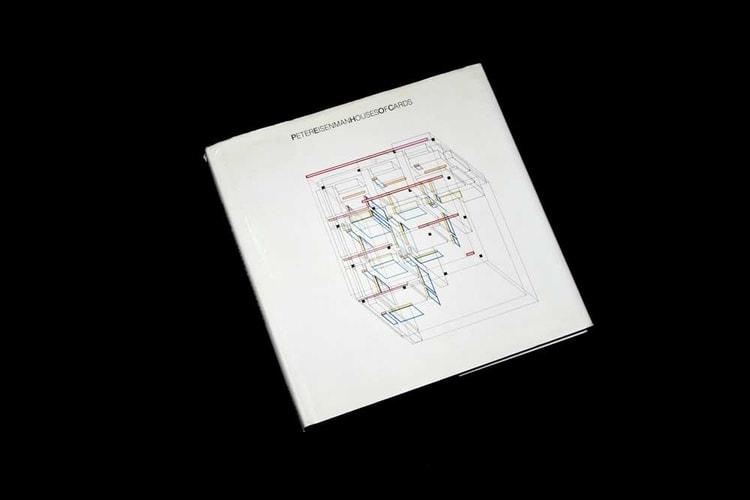
Houses of Cards
0
0
As an Amazon Associate and affiliate partner, Menrva Books earns from qualifying purchases. Learn more
Author Description
Peter Eisenman is known internationally for his innovative and provocative architecture and writings. One of the "New York Five," he has been a leading figure in the architectural community for many years, as teacher, as founder and former director of the Institute for Architecture and Urban Studies, and as builder. This long-awaited book is a rich and complex investigation of his first six houses, which he calls "Houses of Cards" and specifically about House IV and House VI. In these houses, Eisenman has tried to strip architecture of its traditional meanings and associations, making the planes, walls, and elements of the houses as valueless as an arrangement of playing cards.This book contains the architect's own texts on House IV and House VI, which he wrote in 1974, and 1976, as they were being designed, as well as an overview in which he places these houses in the context of his work as a whole. In his essay Manfredo Tafuri offers a psychological perspective; in hers Rosalind Krauss provides cultural and historical contexts. The book is profusely illustrated with sketches, diagrams, and photographs. In some ways, the book itself becomes a new project--somewhat of a metaphor for Eisenman's new approach to architecture--layered with "absences and presences," a complex fiction.
Menrva's Summary
THE THESIS
This book investigates the architectural philosophy of Peter Eisenman by examining his first six residential projects, specifically focusing on the conceptual framework behind House IV and House VI. Eisenman, a prominent figure in the New York Five, argues that architecture should be stripped of traditional associations and meanings. He presents these structures as autonomous systems, comparing their design to the arrangement of playing cards, where elements are treated as valueless components within a formal logic.
THE SCOPE MAP
What You Will Find
- Detailed analysis of House IV and House VI design processes.
- Original essays written by Eisenman during the mid-1970s.
- Critical perspectives from Manfredo Tafuri and Rosalind Krauss.
- Extensive visual documentation including sketches, diagrams, and photographs.
THE AUTHORITY PERSPECTIVE
Experts recognize this volume as a primary source for understanding the development of deconstructivist architectural theory. Readers frequently note the high level of academic density and the complex, self-referential nature of the prose.
Page Count:
224
Publication Date:
1987-12-10
Publisher:
Oxford University Press
ISBN-10:
0195051300
ISBN-13:
9780195051308
Non-Fiction
Architecture
Design
Theory
Community Tags
Similar Books