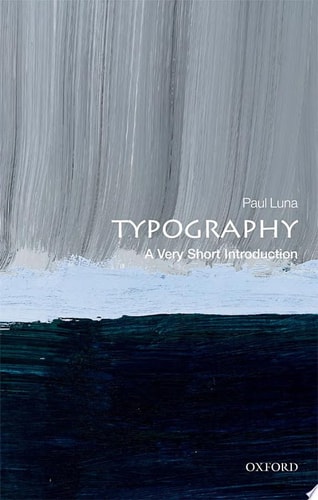
Typography: A Very Short Introduction
0
0
As an Amazon Associate and affiliate partner, Menrva Books earns from qualifying purchases. Learn more
Author Description
Typography, The Art Of Designing Printed Words, Was Once The Domain Of An Elite Few Artists But Has Become An Area With Which Millions Of People Engage Daily. The Widespread Usage Of Digital Devices From Laptops To Tablets And Smart Phones Which Are Used For Written Communications Means That We Are Regularly Asked To Make Decisions About The Fonts, Sizes, And Layouts We Use In Our Writing. This Broadening Engagement With The Field Of Typography Has Led To A Perceptible Shift From Debates About Legibility And Technicalities To Conversations About Which Fonts Best Reflect The Writer's Personality Or Style. In This Very Short Introduction, Paul Luna Offers A Broad Definition Of Typography As Design For Reading, Whether In Print Or On Screens, Where A Set Of Visual Choices Are Taken To Make A Written Message More Accessible, More Easily Transmitted, More Significant, Or More Attractive. Considering The Development Of Letterforms And The Shapes Of Letter We Use, Luna Discusses The History Behind Our Modern Day Letters And Fonts, Before Considering The Issues Behind Key Typographic Decisions, And The Differences Between Printed And On-screen Typography. Presenting Any Piece Of Typography As A Fundamental Design Choice, Luna Introduces The Options Available Today, And Explores The Reasons Why Key Typographic Decisions Are Made. About The Series: The Very Short Introductions Series From Oxford University Press Contains Hundreds Of Titles In Almost Every Subject Area. These Pocket-sized Books Are The Perfect Way To Get Ahead In A New Subject Quickly. Our Expert Authors Combine Facts, Analysis, Perspective, New Ideas, And Enthusiasm To Make Interesting And Challenging Topics Highly Readable.
Menrva's Summary
THE THESIS
How does the evolution of typography from an elite craft to a ubiquitous digital tool influence our daily communication and design choices? Paul Luna, an expert in the field of typography, examines the transition of letterform design from specialized print production to the accessible digital interfaces used by millions. He argues that typography is fundamentally a design process for reading, where visual decisions are made to enhance the accessibility, significance, and aesthetic appeal of written messages across both print and screen media.
THE SCOPE MAP
What You Will Find
- Historical development of letterforms and modern font evolution
- Comparative analysis of print versus on-screen typographic requirements
- Framework for understanding typography as a series of deliberate design choices
Scope Limits
- Does not provide a technical manual or software-specific tutorial for font creation
- Does not offer an exhaustive historical catalog of every typeface ever designed
THE AUTHORITY PERSPECTIVE
Experts and readers recognize this text as a concise, accessible entry point for those seeking to understand the mechanics and history of typography. The prose is noted for its clarity, effectively distilling complex design principles into a format suitable for students and interested laypeople.
Page Count:
144
Publication Date:
2018-01-01
Publisher:
Oxford University Press
ISBN-10:
0191046361
ISBN-13:
9780191046360
Non-Fiction
Communication
Design
Reference
Typography
Graphic Design