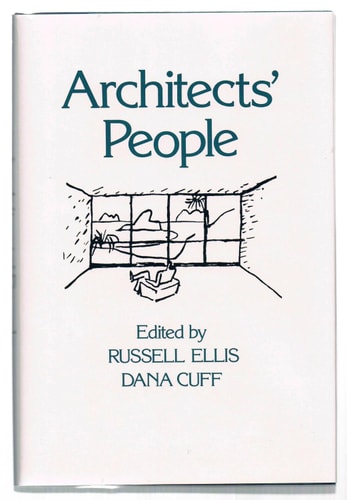
Architects' People
0
0
As an Amazon Associate and affiliate partner, Menrva Books earns from qualifying purchases. Learn more
Author Description
In the past there has been little reason to examine "architects' people"--the people who are imagined to occupy the buildings designed and executed by architects. Societies have historically provided clear rituals and rules for the built environment. Recently, however, the changing conditions of architectural conception and execution have resulted in a need for inventive, socially alert planning. This study, the first to survey the topic, presents architects' ideas about their "people." Contributors such as Robert Gutman and Kent Bloomer, provide fourteen diverse essays that look at individual architects--among them Vitruvius. Wright, Esherick, and Eisenman--and their spoken and written images of social life, their design solutions, the nature and origins of architects' people, and architecturally related policy, politics, and movements. An original treatment of an increasingly important topic, the book will be of interest to a wide range of architects, architectural historians, social scientists, educators, and students of design.
Menrva's Summary
THE THESIS
This book investigates the conceptual gap between the individuals architects imagine occupying their designs and the actual social realities of the built environment. Editors Dana Cuff and Russell Ellis compile a series of essays that analyze how historical and contemporary architects have constructed mental models of their users. By examining the written and spoken rhetoric of figures ranging from Vitruvius to Eisenman, the authors argue that architectural practice is fundamentally shaped by these often-unexamined social assumptions.
THE SCOPE MAP
What You Will Find
- Historical analysis of architectural theory from Vitruvius to modern practitioners.
- Fourteen diverse essays exploring the intersection of design intent and social life.
- Critical examination of how architects' personal ideologies influence urban policy and politics.
- Case studies on specific architects including Wright, Esherick, and Eisenman.
THE AUTHORITY PERSPECTIVE
Experts recognize this work as a foundational text for understanding the social dimensions of architectural design. Readers frequently note the academic density of the prose, which serves as a primary resource for students and professionals in the fields of design and sociology.
Page Count:
320
Publication Date:
1989-08-17
Publisher:
Oxford University Press
ISBN-10:
0195054954
ISBN-13:
9780195054958
Architecture
Social Science
Sociology
Design history
Architects And Community
urban planning
Community Tags
Similar Books