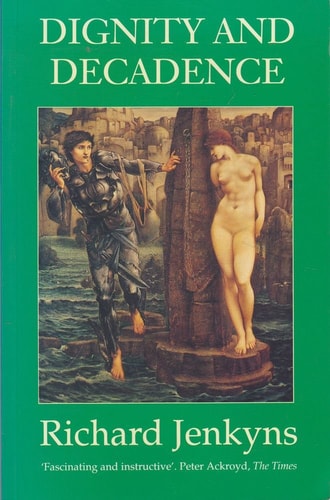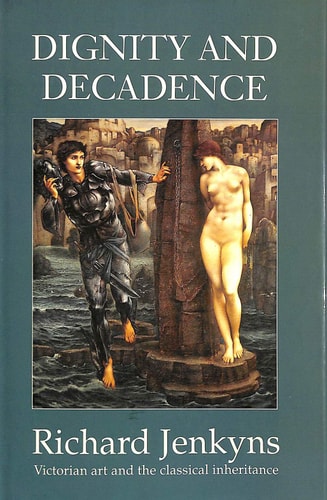
Dignity and Decadence: Some Classical Aspects of Victorian Art and Architecture
0
0
As an Amazon Associate and affiliate partner, Menrva Books earns from qualifying purchases. Learn more
Author Description
The starting point for Richard Jenkyns's latest work is his contention that the Victorian age, which we think of as the great age of Gothic, was so shot through with the influence of the classical past that we should instead think of Victorian art and architecture as the continuing flow forward of two stylistic streams--the Gothic and the classical, side by side. In advancing his argument Jenkyns turns our accepted notions of the Victorians upside down, presenting Ruskin as an admirer of Greek statuary, the Houses of Parliament as a classical rather than a Gothic composition, and Thomas Woolner, the only sculptor among the original Pre-Raphaelite brotherhood, as a neo-Hellenic carver and poet. Jenkyns moves effortlessly between the general and the particular and is refreshingly unafraid to make judgments. Here are some of the best descriptions of Victorian painting, sculpture, and architecture to have appeared in recent years. From the very gradual changes throughout the paintings of Leighton and Alma-Tadema, to the operettas of Gilbert and Sullivan, the 'aesthetic scripture' of Pater, and even the advertisements for Beecham's pills, Jenkyns shows how what had been merely eclectic became a distinctive fin-de-siecle style and eventually began to point the way for Modernism. These are grand themes, presented by a masterly guide. Above all Jenkyns is entertaining: Dignity and Decadence is one of the most illuminating and enjoyable books about the Victorians yet to appear.
Menrva's Summary
THE THESIS
Richard Jenkyns investigates the pervasive, often overlooked influence of the classical tradition on Victorian art and architecture, arguing that the era was defined by a dual allegiance to both Gothic and classical styles. Jenkyns, a scholar of classical antiquity, challenges the conventional view of the Victorian period as exclusively Gothic-dominated. By analyzing a wide array of cultural artifacts, he demonstrates how classical motifs and ideals persisted and evolved, ultimately laying the groundwork for the emergence of Modernism.
THE SCOPE MAP
What You Will Find
- Analysis of the interplay between Gothic and classical stylistic streams in 19th-century design.
- Re-evaluations of major figures including John Ruskin, Thomas Woolner, and painters like Leighton and Alma-Tadema.
- Examination of diverse cultural expressions ranging from high art and sculpture to operettas and commercial advertisements.
- Discussion of the transition from Victorian eclecticism to the aesthetic sensibilities of the fin-de-siecle.
THE AUTHORITY PERSPECTIVE
This work is regarded as a sophisticated and highly readable contribution to Victorian studies, noted for its ability to synthesize broad cultural themes with precise, insightful observations. The text provides a compelling re-framing of the period that remains accessible to both specialists and general readers interested in the evolution of Western aesthetics.
Page Count:
363
Publication Date:
1991-11-21
Publisher:
HarperCollins Publishers
ISBN-10:
0002238438
ISBN-13:
9780002238434
Architecture
Architecture
Victorian Era
Art History
Modernism
Cultural History
Design history
c 1800 to c 1900
Community Tags
Similar Books