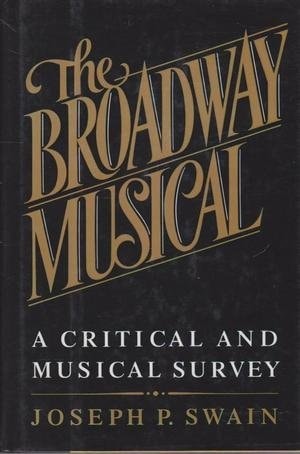
The Broadway Musical: A Critical and Musical Survey
0
0
As an Amazon Associate and affiliate partner, Menrva Books earns from qualifying purchases. Learn more
Author Description
The Broadway musical, one of America's most distinctive contributions to Western music, has been chronicled, dissected, described, and debated, but never until now has its essential element--that glorious music--been analyzed directly in any significant detail. Moving beyond the anecdotes, production histories, and generalizations about theatrical style that mark so much of the critical literature, Joseph P. Swain offers a unique survey of the most important or representative musical plays, one that shows how the great Broadway composers have used the traditional tools of composition--melody, harmony, tonal movement, rhythm, and texture--to become powerful dramatists in their own right.Illustrated with over 150 musical excerpts--a unique feature that gives Swain's analysis unparalleled depth and precision--the book yields new insights at every turn. It shows how particular musical solutions to dramatic problems gave Showboat and Oklahoma! the power to change the course of the Broadway tradition, brought Carousel and West Side Story to worldwide recognition as masterpieces of their kind, and lent a light popular genre the formal complexity and emotional range to encompass a tremendous diversity of styles and materials, from Shakespearean drama (Kiss Me, Kate and West Side Story) to European opera (Porgy and Bess), and from age-old myth (My Fair Lady and Camelot) to still-current ethnic conflict (Fiddler on the Roof). All the great Broadway composers and musical-comedy teams are here--Jerome Kern, George Gershwin, Rodgers and Hammerstein, Frank Loesser, Leonard Bernstein, Lerner and Loewe--as well as a representative sample of the classic shows, including the sadly neglected The Most Happy Fella. In addition, Swain's thoughtful evaluation of the current scene illuminates issues of dramatic approach (Godspell), plot (A Chorus Line), subject matter (Jesus Christ Superstar and Evita), and musical rhetoric (Stephen Sondheim's output, exemplified by Sweeney Todd) that may
Menrva's Summary
THE THESIS
This book investigates how the musical compositions of Broadway shows function as essential dramatic tools rather than mere accompaniment. Joseph P. Swain, a scholar of musicology, moves beyond traditional production history to analyze the technical mechanics of melody, harmony, and rhythm. By examining the scores of iconic works, he argues that Broadway composers are sophisticated dramatists who utilize formal musical structures to solve narrative problems and elevate the emotional range of the genre.
THE SCOPE MAP
What You Will Find
- Technical analysis of musical elements including melody, harmony, tonal movement, rhythm, and texture.
- Detailed case studies of landmark productions such as Showboat, Oklahoma!, West Side Story, and Sweeney Todd.
- Over 150 musical excerpts providing direct evidence of compositional techniques.
- Evaluation of how composers adapted diverse styles ranging from Shakespearean drama to European opera.
THE AUTHORITY PERSPECTIVE
Experts highlight this work as a foundational text for those seeking a rigorous musicological approach to musical theater. Readers frequently note the technical density of the prose, which provides a level of analytical precision rarely found in standard theater histories.
Page Count:
400
Publication Date:
1990-05-24
Publisher:
Oxford University Press
ISBN-10:
0195054342
ISBN-13:
9780195054347
History
Music
Criticism
Theater
Criticism history
Community Tags
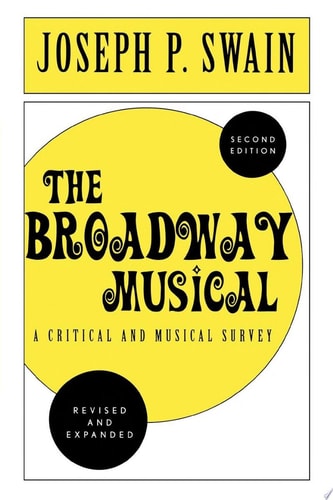
Other Editions(3)
Similar Books



Reader Comments
Share Your Thoughts
No comments yet. Be the first to share your thoughts!