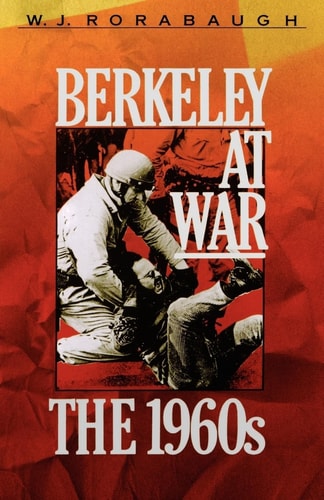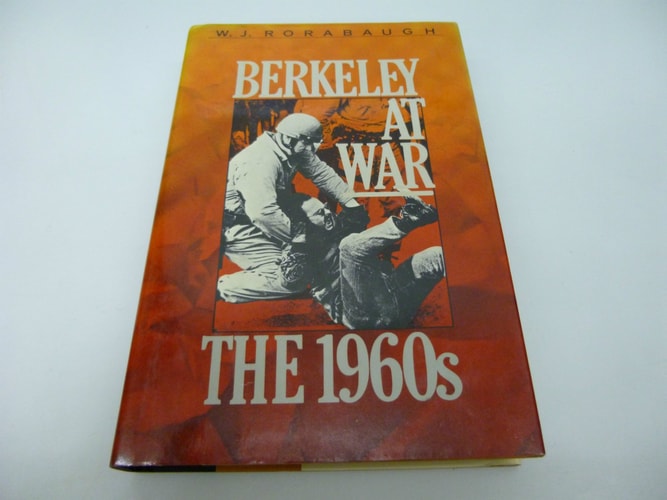
Berkeley at War: The 1960s
0
0
As an Amazon Associate and affiliate partner, Menrva Books earns from qualifying purchases. Learn more
Author Description
Berkeley, California, was the bellwether of the political, social, and cultural upheaval that made the 1960s a unique period of American history--a time when the top-down methods of a conservative establishment collided head-on with the bottom-up, grass-roots ethos of the civil rights movement and an increasingly well-educated and individualistic middle class.W.J. Rorabaugh, who attended the graduate school of the University of California at Berkeley in the early 1970s, presents a lively and informative account of the events that overtook and changed forever what had once been a quiet, conservative white suburb. The rise of the Free Speech Movement, which gave a voice to disfranchised students; the growth and increasing militance of a black community struggling to end segregation; the emergence of radicalism and the anti-war movement; the blossoming of "hippie" culture, with its scorn for materialism and enthusiasm for experimentation with everything from sex and drugs to Eastern philosophies; the beginnings of modern-day feminism and environmentalism--and how all of these coalesced in the explosive conflict over People's Park--are traced in a meticulously researched and authoritative narrative.At issue was the question of power, and the struggle between the establishment and the powerless led to developments that the advocates of a freer society could scarcely have foreseen: Ronald Reagan, elected governor of California in reaction to the events at Berkeley, and Edwin H. Meese III, who battled against the student movement and People's Park, rose to national power in the 1980s (without, however, gaining any popularity in Berkeley, where Walter Mondale won 83 percent of the vote in 1984). An invaluable account of its time and place, this book anchors the '60s in American history, both before and since that colorful decade.
Menrva's Summary
THE THESIS
This work investigates how the political, social, and cultural upheavals in Berkeley, California, during the 1960s served as a microcosm for the broader transformation of American society. W.J. Rorabaugh, a historian who experienced the era firsthand as a graduate student at the University of California, Berkeley, utilizes extensive research to document the collision between the conservative establishment and emerging grassroots movements. The text argues that these local conflicts over power, civil rights, and cultural norms fundamentally reshaped the national political landscape for decades to come.
THE SCOPE MAP
What You Will Find
- Detailed analysis of the Free Speech Movement and its impact on student activism.
- Examination of the rise of radicalism, the anti-war movement, and the development of countercultural hippie lifestyles.
- Historical documentation of the People's Park conflict and its role in the polarization of California politics.
- Assessment of the long-term political consequences, including the rise of conservative figures like Ronald Reagan and Edwin Meese III.
THE AUTHORITY PERSPECTIVE
Historians and scholars recognize this text as a definitive account of the Berkeley experience during the 1960s. Readers frequently note the meticulous research and the author's ability to balance local narrative detail with broader national historical context.
Page Count:
328
Publication Date:
1989-05-04
Publisher:
Oxford University Press
ISBN-10:
0195058771
ISBN-13:
9780195058772
History
1960s
Riots_california
Social History
California history