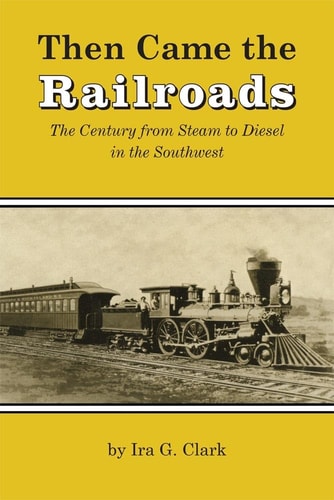
Then Came the Railroads: The Century from Steam to Diesel in the Southwest
0
0
As an Amazon Associate and affiliate partner, Menrva Books earns from qualifying purchases. Learn more
Author Description
The arrival of railroads in the Gulf Southwest marked a turning point in America’s last frontier. Although the railroads were not the primary cause of westward expansion, they furnished the ways and means for hardy and courageous people, some from distant lands, to build and develop a vast new segment of a growing America. Then Came the Railroads: The Century from Steam to Diesel in the Southwest tells the story of these railroads and the people who built and followed them. American Indians, the land, and even the elements were hostile to the railroad builders, who laid thousands of miles of shining rails from Kansas and Missouri to the Gulf and from the Mississippi to the Rockies. Frontier settlers also faced hostile conditions, and they did not always see eye to eye with the railroads. But when faced with overwhelming odds, they joined forces and worked together to make the Southwest what it is today. The road was not easy. The railroads were torn by internal strife, and settlers met seemingly insurmountable obstacles: droughts, floods, and economic depression. Railroads and settlers depended on each other for existence, and with that realization came the answer to coexistence—friendly cooperation.
Menrva's Summary
THE THESIS
The arrival of railroads in the Gulf Southwest fundamentally reshaped America's last frontier, enabling the development of a vast new segment of a growing nation. Ira G. Clark details the complex relationship between the railroad builders and the hardy settlers who followed them, navigating a landscape fraught with challenges from American Indians, harsh elements, and internal strife. The narrative explores the symbiotic dependence between the railroads and settlers, highlighting how cooperation became the key to overcoming obstacles like droughts, floods, and economic depressions to forge the modern Southwest.
THE SCOPE MAP
- The history of railroad development from steam to diesel in the American Southwest.
- The challenges faced by railroad builders, including environmental and human opposition.
- The experiences of frontier settlers and their often-contentious relationship with railroad companies.
- The role of railroads in westward expansion and the development of the region.
- Case studies of cooperation and conflict between settlers and railroad interests.
- The impact of natural disasters and economic downturns on railroad and settler communities.
THE AUTHORITY PERSPECTIVE
This comprehensive historical account is regarded as a significant contribution to the understanding of the American Southwest's development. The book meticulously details the era when railroads transformed the region, drawing on extensive research into the period's challenges and triumphs. It is recognized for its balanced portrayal of the complex interactions between railroad magnates, settlers, and indigenous populations. The narrative effectively captures the spirit of an era defined by both immense hardship and remarkable progress.
Page Count:
366
Publication Date:
1958-04-04
Publisher:
University of Oklahoma Press
ISBN-10:
0806147997
ISBN-13:
9780806147994
Non-Fiction
History
Southwest History
Transportation History
American West
Community Tags
Other Editions(2)
Similar Books