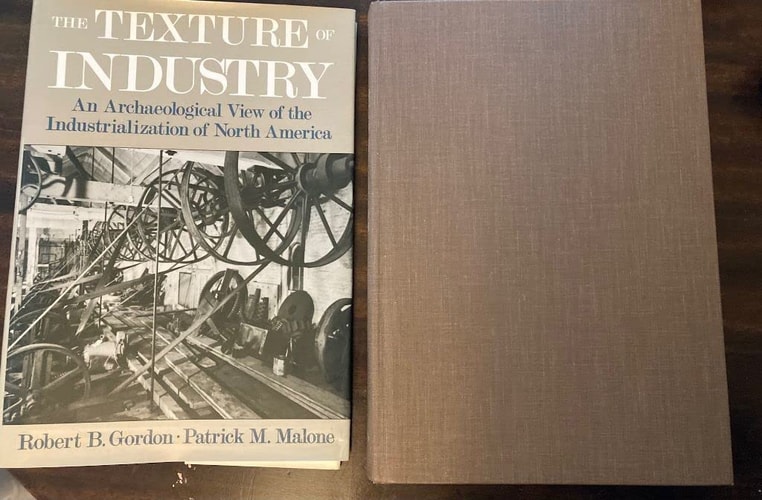
The Texture of Industry: An Archaeological View of the Industrialization of North America
0
0
As an Amazon Associate and affiliate partner, Menrva Books earns from qualifying purchases. Learn more
Author Description
The Texture of Industry looks at the industrialization of North America from the perspective of the industrial archaeologist. This heavily illustrated study demonstrates the value of material evidence in the interpretation of the past. Using examples that range from Indian steatite quarries to automobile plants and coal mines, the authors examine manufacturing technology, transportation systems, and the effects of industrialization on the land. While historians have given ample attention to stories of entrepreneurship, heroic invention, and labor conflict, they have told us little about actual workplaces and the skills employed in them. Americans from past generations seldom wrote about their daily work. However, they did leave us examples of their tools, products, shops, and factories. They also left us industrial landscapes and communities that speak eloquently of the costs associated with the production of wealth from natural resources. Industrial archaeologists study physical traces in combination with documents and other sources. Their research has greatly expanded our understanding of industry and focused attention on the contributions of anonymous artisans who applied their skills to shape our industrial heritage. The incremental, unrecorded innovations of countless workers are finally brought to light in this pathbreaking book.
Menrva's Summary
THE THESIS
This book investigates how material evidence and physical landscapes provide a more comprehensive understanding of North American industrialization than traditional written records alone. Authors Patrick M. Malone and Robert B. Gordon, both experts in industrial archaeology, argue that the history of production is often obscured by a focus on entrepreneurship and labor conflict. They propose a framework that integrates physical artifacts—such as tools, factories, and landscapes—with historical documentation to reveal the daily realities and technical innovations of anonymous workers. By analyzing these tangible remnants, the authors reconstruct the evolution of manufacturing technology and the environmental impact of industrial growth.
THE SCOPE MAP
What You Will Find
- Analysis of diverse industrial sites ranging from prehistoric steatite quarries to modern automobile plants and coal mines.
- Methodologies for interpreting material culture alongside traditional historical archives.
- Examination of the physical evolution of manufacturing technology and transportation infrastructure.
- Assessment of the environmental and social costs associated with the extraction and processing of natural resources.
THE AUTHORITY PERSPECTIVE
Scholars and historians recognize this work as a foundational text for the field of industrial archaeology, praised for its interdisciplinary approach to material culture. Readers frequently note the clarity of the prose and the effectiveness of the illustrations in bridging the gap between technical history and social history.
Page Count:
464
Publication Date:
1994-01-20
Publisher:
Oxford University Press
ISBN-10:
0195058852
ISBN-13:
9780195058857
History
Industrial archaeology
Archaeology
Technology
Industrial history
Community Tags
Similar Books