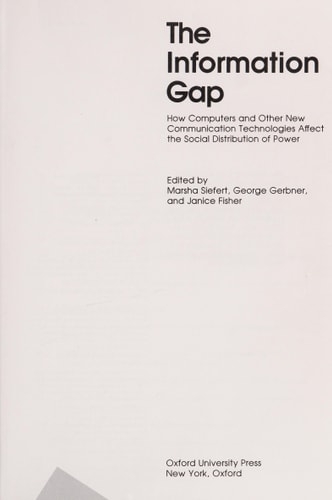
The Information Gap: How Computers and Other New Communication Technologies Affect the Social Distribution of Power
0
0
As an Amazon Associate and affiliate partner, Menrva Books earns from qualifying purchases. Learn more
Author Description
Product DescriptionThe computer and other new communication technologies have changed the way we live. However every technological innovation carries with it the potential to liberate or exclude various parts of our society, and the current information age seems to fragment and privatize access to the knowledgeprovided by the new technologies. Who is affected by the "information gap" and what is the role of communication technology in widening or closing it? These vital, complex questions are the subject of this special issue of the Journal of Communication--the noted computer-age forum for debate andscientific understanding. The Information Gap brings together articles, reports, and proposals from a broad variety of cross-disciplinary sources. The result is a comprehensive and enlightening overview that probes current trends in the social distribution of the new technologies, explores theobstacles to information equality, and shows how some social groups have embraced today's technological promise more than others. This special edition also provides commentary on entrenched institutional barriers that may contribute to the persistence of the information gap. This report will be ofvalue to all readers interested in the impact of the computer age on today's society and the world of the future.About the AuthorMarsha Siefert is Editor of the Journal of Communication.
Menrva's Summary
THE THESIS
This work investigates how the rapid proliferation of computer-based communication technologies influences the equitable distribution of power and knowledge across different social strata. The author, Marsha Siefert, leverages her position as editor of the Journal of Communication to compile a multi-disciplinary analysis of the digital divide. The text argues that while technological innovation offers potential for liberation, it simultaneously risks fragmenting society by privatizing access to essential information and reinforcing existing institutional barriers.
THE SCOPE MAP
What You Will Find
- Analysis of current trends in the social distribution of new communication technologies.
- Examination of institutional obstacles that prevent universal information equality.
- Case studies and reports detailing how specific social groups interact with technological advancements.
- Proposals for addressing the widening gap between information-rich and information-poor populations.
THE AUTHORITY PERSPECTIVE
Experts recognize this collection as a foundational resource for understanding the early socio-political implications of the computer age. Readers frequently note the academic density of the prose, which serves as a comprehensive reference for those studying the intersection of technology and social policy.
Page Count:
232
Publication Date:
1990-02-22
Publisher:
Oxford University Press
ISBN-10:
0195064895
ISBN-13:
9780195064896
Social Science
Technology
Sociology
Computers
Digital divide
Communication
Social Aspects
Community Tags
Similar Books