
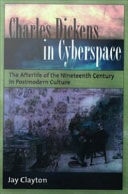
Charles Dickens in Cyberspace: The Afterlife of the Nineteenth Century in Postmodern Culture
0
0
As an Amazon Associate and affiliate partner, Menrva Books earns from qualifying purchases. Learn more
Author Description
Charles Dickens in Cyberspace opens a window on a startling set of literary and scientific links between contemporary American culture and the nineteenth-century heritage it often repudiates. Surveying a wide range of novelists, scientists, filmmakers, and theorists from the past two centuries, Jay Clayton traces the concealed circuits that connect the telegraph with the Internet, Charles Babbage's Difference Engine with the digital computer, Frankenstein's monster with cyborgs and clones, and Dickens' life and fiction with all manner of contemporary popular culture--from comic books and advertising to recent novels and films. In the process, Clayton argues for two important principles: that postmodernism has a hidden or repressed connection with the nineteenth-century and that revealing those connections can aid in the development of a historical cultural studies. In Charles Dickens in Cyberspace nineteenth-century figures--Jane Austen, Charles Darwin, Charles Dickens, Thomas Hardy, Henry James, Ada Lovelace, Joseph Paxton, Mary Shelley, and Mary Somerville--meet a lively group of counterparts from today: Andrea Barrett, Greg Bear, Peter Carey, Hélène Cixous, Alfonso Cuarón, William Gibson, Donna Haraway, David Lean, Richard Powers, Salman Rushdie, Ridley Scott, Susan Sontag, Neal Stephenson, Bruce Sterling, and Tom Stoppard. The juxtaposition of such a diverse cast of characters leads to a new way of understanding the "undisciplined culture" the two eras share, an understanding that can suggest ways to heal the gap that has long separated literature from science. Combining storytelling and scholarship, this engaging study demonstrates in its own practice the value of a self-reflective stance toward cultural history. Its personal voice, narrative strategies, multiple points of view, recursive loops, and irony emphasize the improvisational nature of the methods it employs. Yet its argument is serious and urgent: that the afterlife of the nineteenth century continues
Menrva's Summary
THE THESIS
This book investigates the surprising and often unacknowledged connections between contemporary postmodern culture and its nineteenth-century literary and scientific heritage. Jay Clayton, a scholar of contemporary literature, examines how elements of the 19th century, often seen as repudiated, are in fact deeply embedded in modern society. The book traces links from early computing and telegraphy to the internet, and from literary figures like Mary Shelley to modern concepts of cyborgs and clones. Clayton argues that understanding these hidden connections is crucial for developing a robust historical cultural studies and for bridging the perceived gap between literature and science.
THE SCOPE MAP
- Exploration of literary and scientific links between the 19th century and contemporary American culture.
- Analysis of figures such as Charles Babbage, Mary Shelley, and Charles Dickens in relation to modern concepts.
- Comparison of 19th-century technologies (telegraph, Difference Engine) with contemporary ones (Internet, digital computer).
- Discussion of postmodernism's repressed connection with the 19th century.
- Argument for the development of a historical cultural studies through revealing these connections.
- Juxtaposition of 19th-century figures (Austen, Darwin, Hardy, James) with contemporary counterparts (Gibson, Rushdie, Stoppard).
- Examination of shared themes in 'undisciplined culture' across both eras.
- Demonstration of a self-reflective stance toward cultural history through narrative strategies and irony.
THE AUTHORITY PERSPECTIVE
The book is recognized for its innovative approach to cultural studies, highlighting the often-overlooked continuities between the nineteenth century and postmodernism. Critics have noted its engaging style, which blends scholarly rigor with narrative techniques to explore the afterlife of Victorian themes and technologies in contemporary culture. The work is seen as a significant contribution to understanding how historical literary and scientific developments continue to shape our present, particularly in the digital age. Its argument for a unified historical cultural studies that bridges the arts and sciences has been a key takeaway for readers.
Page Count:
280
Publication Date:
2003-08-07
Publisher:
Oxford University Press
ISBN-10:
0195347730
ISBN-13:
9780195347739
Non-Fiction
Literary Criticism
Postmodernism
Community Tags
Other Editions(2)
Similar Books
Reader Comments
Share Your Thoughts
No comments yet. Be the first to share your thoughts!