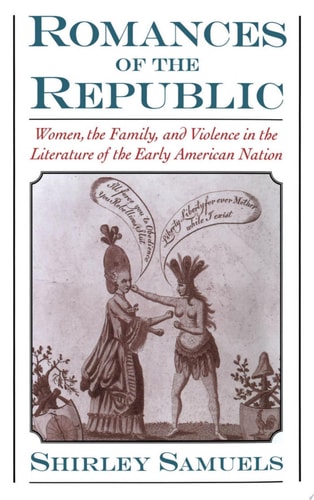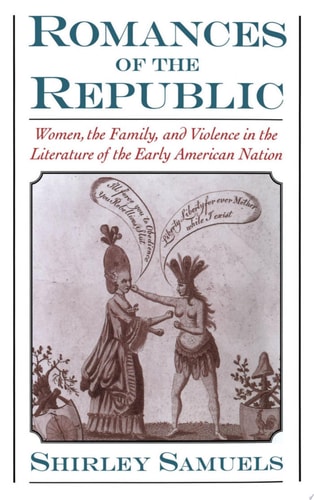
Romances of the Republic: Women, the Family, and Violence in the Literature of the Early American Nation
0
0
As an Amazon Associate and affiliate partner, Menrva Books earns from qualifying purchases. Learn more
Author Description
Romances of the Republic contributes to the lively field of scholarship on the interconnection of ideology and history in early American literature. Shirley Samuels illustrates the relations of sexual, political, and familial rhetoric in American writing from 1790 to the 1850s. With special focus on depictions of the American Revolution and on the use of the family as a model and instrument of political forces, she examines how the historical novel formalizes the more extravagant features of the gothic novel--incest, murder, the horror of family--while incorporating a sentimental vision of the family.Samuels's analysis deals with writers like Charles Brockden Brown, Catherine Sedgwick, James Fenimore Cooper, and Mason Weems, and argues that their novels formulated a family structure that, unlike earlier models, was neither patriarchal nor a revolt against patriarchy. In emphasizing sibling rivalry and inter-generational quarrels about marriage, the novel of this period attempted to unite disparate political, national, class, and even racial positions.
Menrva's Summary
THE THESIS
This work investigates how early American literature utilized the family as a rhetorical model to navigate the complex intersections of political, sexual, and national identity. Shirley Samuels, a scholar of American literature, draws upon historical texts and novels from 1790 to the 1850s to argue that these narratives constructed a unique family structure. By analyzing the works of authors such as Charles Brockden Brown and James Fenimore Cooper, she demonstrates how the literature of the period attempted to reconcile disparate class, racial, and political positions through the lens of domestic dynamics.
THE SCOPE MAP
What You Will Find
- Analysis of American literature from 1790 to the 1850s.
- Examination of the intersection between gothic horror tropes and sentimental family narratives.
- Critical study of authors including Charles Brockden Brown, Catherine Sedgwick, and Mason Weems.
- Exploration of how political rhetoric was embedded within depictions of sibling rivalry and marriage.
THE AUTHORITY PERSPECTIVE
Scholars in the field of early American studies recognize this text as a significant contribution to the understanding of how domestic ideology shaped national identity. Readers frequently note the academic density of the prose and its effectiveness in connecting literary tropes to broader historical and political shifts.
Page Count:
208
Publication Date:
1996-08-29
Publisher:
Oxford University Press
ISBN-10:
0195079884
ISBN-13:
9780195079883
FICTION Historical
American fiction
American History
In literature
Literary Criticism