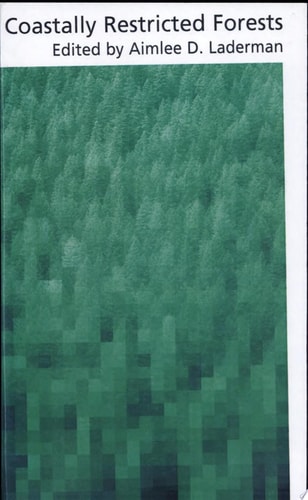
Coastally Restricted Forests: Biological Resource Management
0
0
As an Amazon Associate and affiliate partner, Menrva Books earns from qualifying purchases. Learn more
Author Description
A few conifers are found in nature only in narrow, discontinuous bands bordering continental margins. Despite their maritime location, these trees cannot thrive in saline waters and soils. What enables them to grow in challenging habitats? Why don't these species naturalize inland? What characteristics allow them to succeed only near salt water?A strange combination of qualities is seen: the trees are catastrophe-dependent, stress-tolerant, with broad niche potential, but are poor competitors in "easy" sites. They all possess moisture-conserving features usually associated with arid lands, although they grow in regions of high humidity and frequent fogs.This volume is the first to assemble and compare information on widely dispersed coastal forests of the Northern Hemisphere. Authorities on each system explore the properties of these unusual trees and their habitats, and formulate guidelines for their appropriate management and protection. The thirty-six contributing authors include natural resource managers and regulators, ecologists, lumbermen, geneticists, botanists, and paleontologists. The book draws from work on three continents, eight countries, and twenty-three states of the Unites States. One half of the volume is devoted to the seven highly prized, commercially valuable Chamaecyparis species.
Menrva's Summary
THE THESIS
This volume investigates the ecological paradox of conifer species that are restricted to narrow, discontinuous coastal bands despite their inability to tolerate saline conditions. Aimlee D. Laderman compiles research from thirty-six contributors, including ecologists, geneticists, and resource managers, to analyze why these trees thrive in high-humidity maritime environments while failing to naturalize inland. The text presents a comparative framework that evaluates the physiological traits of these catastrophe-dependent, stress-tolerant species to determine how they maintain their niche in challenging habitats.
THE SCOPE MAP
What You Will Find
- Comparative analysis of coastal forest systems across three continents, eight countries, and twenty-three U.S. states.
- Detailed examination of the seven commercially valuable Chamaecyparis species.
- Synthesis of botanical, paleontological, and genetic data regarding moisture-conserving adaptations.
- Management and protection guidelines for natural resource regulators and forestry professionals.
THE AUTHORITY PERSPECTIVE
Experts recognize this volume as a foundational reference for understanding the unique physiological constraints of coastal conifers. Readers frequently note the technical density of the prose, which serves as a comprehensive resource for both academic researchers and land management practitioners.
Page Count:
352
Publication Date:
1997-12-18
Publisher:
Oxford University Press
ISBN-10:
0195075676
ISBN-13:
9780195075670
Science
Ecology
Botany
Forestry
Forests and forestry
Biology
Community Tags
Similar Books