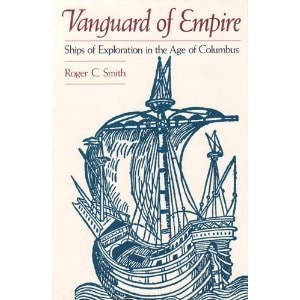
Vanguard of Empire: Ships of Exploration in the Age of Columbus
0
0
As an Amazon Associate and affiliate partner, Menrva Books earns from qualifying purchases. Learn more
Author Description
In this book, Smith has assembled a portrait of the small vessels invented and refined in the shipyards of Spain and Portugal half a millennium ago. He focuses on the advances in maritime technology that made the European conquest of the New World possible. Shipwrights worked by trial and error to make ships that would travel faster and farther, carrying larger and larger cargoes. Pilots developed new methods of celestial navigation and learned the patterns of wind and sea currents. Long voyages taxed the physical and emotional well-being of the crew, requiring new methods of supply and sustenance. In addition to covering these developments, Smith's book shows how ships were built, outfitted, and manned, illustrating what life at sea was like in the late fifteenth and sixteenth centuries. Focusing on the advances in maritime technology that made European expansion possible, this book will shed light on a neglected aspect of the European conquest of the New World.
Menrva's Summary
THE THESIS
This work investigates how specific advancements in maritime technology and naval architecture enabled the European exploration and conquest of the New World during the fifteenth and sixteenth centuries. Roger C. Smith, a maritime archaeologist, utilizes historical records and technical analysis to examine the evolution of Iberian ship design. He argues that the success of these voyages was not merely a matter of ambition, but the result of iterative improvements in ship construction, celestial navigation, and logistical management. The text provides a comprehensive framework for understanding the material conditions that facilitated transoceanic travel.
THE SCOPE MAP
What You Will Find
- Technical evolution of Iberian shipyards in Spain and Portugal
- Development of celestial navigation techniques and understanding of oceanic currents
- Analysis of ship construction, outfitting, and manning practices
- Examination of logistical challenges regarding crew sustenance and supply on long voyages
THE AUTHORITY PERSPECTIVE
Experts recognize this work as a significant contribution to maritime archaeology and the history of technology. Readers frequently note the clarity with which the author explains complex naval engineering concepts for a general audience.
Page Count:
328
Publication Date:
1993-04-08
Publisher:
Oxford University Press
ISBN-10:
0195073576
ISBN-13:
9780195073577
History
Ships
European History
Technology
Exploration
Maritime history
Community Tags
Similar Books