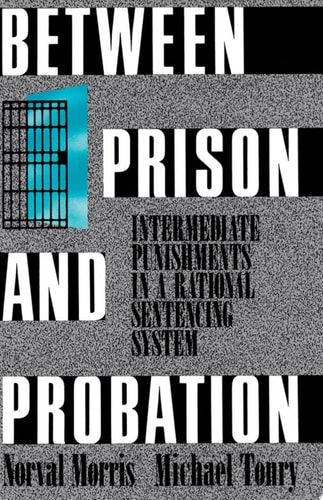
Between Prison and Probation: Intermediate Punishments in a Rational Sentencing System
0
0
As an Amazon Associate and affiliate partner, Menrva Books earns from qualifying purchases. Learn more
Author Description
Across the country prisons are jammed to capacity and, in extreme cases, barges and mobile homes are used to stem the overflow. Probation officers in some cities have caseloads of 200 and more--hardly a manageable number of offenders to track and supervise. And with about one million people in prison and jail, and two and a half million on probation, it is clear we are experiencing a crisis in our penal system.In Between Prison and Probation, Norval Morris and Michael Tonry, two of the nation's leading criminologists, offer an important and timely strategy for alleviating these problems. They argue that our overwhelmed corrections system cannot cope with the flow of convicted offenders because the two extremes of punishment--imprisonment and probation--are both used excessively, with a near-vacuum of useful punishments in between. Morris and Tonry propose instead a comprehensive program that relies on a range of punishment including fines and other financial sanctions, community service, house arrest, intensive probation, closely supervised treatment programs for drugs, alcohol and mental illness, and electronic monitoring of movement. Used in rational combinations, these "intermediate" punishments would better serve the community than our present polarized choice. Serious consideration of these punishments has been hindered by the widespread perception that they are therapeutic rather than punitive. The reality, however, Morris and Tonry argue, "is that the American criminal justice system is both too severe and too lenient--almost randomly." Systematically implemented and rigorously enforced, intermediate punishments can "better and more economically serve the community, the victim, and the criminal than the prison terms and probation orders they supplant."Between Prison and Probation goes beyond mere advocacy of an increasing use of intermediate punishments; the book also addresses the difficult task of fitting these punishments into a comprehensive, fair and com
Menrva's Summary
THE THESIS
This work investigates whether the implementation of intermediate punishments can resolve the systemic crisis caused by the binary reliance on imprisonment and probation in the American criminal justice system. Authors Michael Tonry and Norval Morris, both distinguished criminologists, utilize extensive analysis of sentencing patterns and correctional capacity to argue that the current system is both inconsistently severe and lenient. They propose a structured framework of intermediate sanctions—ranging from financial penalties to electronic monitoring—designed to create a more rational, fair, and economically viable sentencing model.
THE SCOPE MAP
What You Will Find
- Analysis of the structural failures in current prison and probation caseload management.
- A comprehensive taxonomy of intermediate punishments including house arrest, community service, and intensive supervision.
- Evaluation of the perceived therapeutic versus punitive nature of non-custodial sentencing.
- Methodological frameworks for integrating intermediate sanctions into existing legal sentencing guidelines.
THE AUTHORITY PERSPECTIVE
Experts recognize this text as a foundational contribution to the discourse on sentencing reform and correctional policy. Readers frequently highlight the authors' pragmatic approach to balancing public safety with the economic realities of an overburdened penal system.
Page Count:
283
Publication Date:
1991-09-12
Publisher:
Oxford University Press
ISBN-10:
0195071387
ISBN-13:
9780195071382
Criminology
Public Policy
Probation
Corrections
Sociology
Law
Community Tags
Other Editions(2)
Similar Books

Reader Comments
Share Your Thoughts
No comments yet. Be the first to share your thoughts!