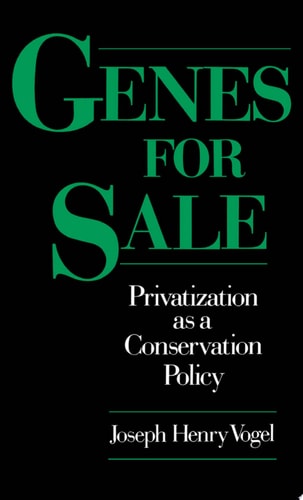
Genes for Sale: Privatization as a Conservation Policy
0
0
As an Amazon Associate and affiliate partner, Menrva Books earns from qualifying purchases. Learn more
Author Description
With each species lost to the mass extinction crisis, the natural economy of the nation and of the world is greatly diminished. An endangered animal may hold the cure for cancer; a threatened plant could someday become a major food crop; and even bacteria often provide novel molecular structures in polymer science. As the rainforest is destroyed and habitats are degraded, conservationists are now urgently searching for dramatic new ways to save these economic resources.In this provocative and important book, Joseph Henry Vogel details one potential solution that has met with increasing interest and popularity: the privatization of genetic information. Vogel cogently makes the case that the world should abandon the doctrine of "the common heritage of mankind" and create private property rights over genes. Landowners, once vested with the genetic resources on their land, will have a newfound financial incentive to protect what they now already control.Genes for Sale provides an overview of the many complexities inherent in implementing a viable conservation policy. Vogel elaborates both technical issues like the construction of a "gargantuan database" of landtitles and biological inventories, and political issues like legal reform. Clearly written, engaging, and timely, Genes for Sale provides students, scientists, and policy makers alike with the ideal introduction to an exciting and controversial new approach to saving our precious living heritage.
Menrva's Summary
THE THESIS
Can the privatization of genetic information serve as a viable mechanism to halt the mass extinction crisis and incentivize biodiversity conservation? Joseph Henry Vogel, an expert in the economics of biodiversity, argues that the traditional doctrine of the common heritage of mankind fails to protect endangered species. He proposes a shift toward private property rights for genetic resources, suggesting that landowners will actively preserve habitats if they possess a direct financial stake in the genetic material found on their property.
THE SCOPE MAP
What You Will Find
- An economic analysis of the transition from common heritage to private property rights for genetic resources.
- Technical requirements for implementing a global database of land titles and biological inventories.
- Legal and political reform strategies necessary to establish and enforce genetic property rights.
- Case-based arguments regarding the potential for medicinal and industrial applications of biodiversity to drive conservation funding.
THE AUTHORITY PERSPECTIVE
Experts and policy analysts frequently cite this work as a foundational text for understanding the intersection of intellectual property law and environmental economics. Readers often note the academic rigor of the prose, which balances complex legal theory with practical conservation objectives.
Page Count:
176
Publication Date:
1994-08-25
Publisher:
Oxford University Press
ISBN-10:
0195089103
ISBN-13:
9780195089103
Science
Economics
Biodiversity
Law
Genetics
Privatization
Conservation
Community Tags
Similar Books