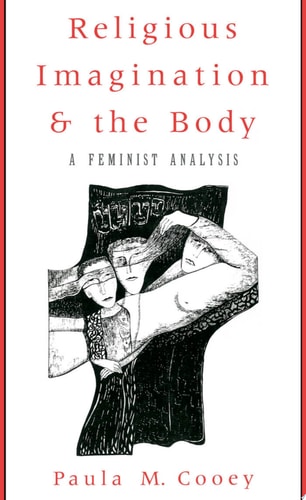
Religious Imagination and the Body: A Feminist Analysis
0
0
As an Amazon Associate and affiliate partner, Menrva Books earns from qualifying purchases. Learn more
Author Description
In recent years feminist scholarship has increasingly focused on the importance of the body and its representations in virtually every social, cultural, and intellectual context. Many have argued that because women are more closely identified with their bodies than men are, they have access to privileged and different kinds of knowledge. In this landmark new book, Paula Cooey offers a new perspective on the significance of the body in the context of religious life and practice. Religious Imagination and the Body addresses such vital concerns as the role of the body in religious experience, the impact of gender or sexual difference on religious experience and its authority, and the viability of women's religious experience as an authoritative alternative to male-centered and male-dominated culture. Cooey argues an innovative position that is both critical and constructive, thus contributing to the ongoing debates in contemporary theory of religion, philosophical theology, and feminist theory. Building on the pathbreaking work of Elaine Scarry in The Body in Pain, Cooey looks at a wide range of evidence, from the Argentine prison narrative of Alicia Partnoy, to the novels of Toni Morrison and the paintings of Frida Kahlo. Using current social theory and critique, cognitive psychology, contemporary fiction and art, and women's accounts of religious experience, Cooey relates the reality of sentience to the social construction of reality. Analyzing the female body as a metaphor for alternative knowledge, Cooey considers the significance of physical pain and pleasure to the religious imagination, and the relations between sentience, sensuality, and female subjectivity. This important study brings forward a sophisticated new understanding of the religious importance of the body, at the same time laying the foundations of a feminist theory of religion.
Menrva's Summary
THE THESIS
This book investigates how the female body serves as a critical site for religious imagination and the construction of alternative forms of knowledge. Paula M. Cooey, a scholar in the field of religious studies, utilizes a multidisciplinary framework to challenge traditional male-centered theological paradigms. By integrating social theory, cognitive psychology, and artistic analysis, she argues that physical sentience—specifically pain and pleasure—is central to understanding religious experience and subjectivity.
THE SCOPE MAP
What You Will Find
- Analysis of the female body as a metaphor for alternative knowledge and religious authority.
- Examination of the intersection between physical sentience, sensuality, and female subjectivity.
- Case studies ranging from the prison narratives of Alicia Partnoy to the literary works of Toni Morrison and the art of Frida Kahlo.
- A constructive framework for a feminist theory of religion that critiques existing philosophical theology.
THE AUTHORITY PERSPECTIVE
Scholars frequently cite this work as a foundational text for those exploring the intersection of embodiment and religious practice. Experts note the text's academic density and its significant contribution to contemporary debates within feminist theory and the philosophy of religion.
Page Count:
216
Publication Date:
1994-05-12
Publisher:
Oxford University Press
ISBN-10:
0195087356
ISBN-13:
9780195087352
Philosophy
Gender Studies
Imagination
Feminist Theory
Religious Aspects
Human Body
Theology
Community Tags
Similar Books