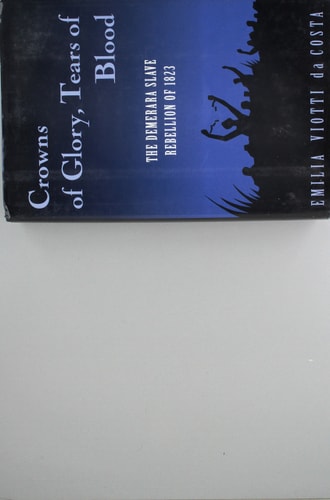
Crowns of Glory, Tears of Blood: The Demerara Slave Rebellion of 1823
0
0
As an Amazon Associate and affiliate partner, Menrva Books earns from qualifying purchases. Learn more
Author Description
On the night of August 17, 1823, the distinctly African sounds of blaring shell-horns and beating drums signalled the start of one of the most massive slave rebellions in the history of the Western Hemisphere, the uprising in the British colony of Demerara (now Guyana). That evening, nine to twelve thousand slaves surrounded the main houses of about sixty plantations, armed with cutlasses, knives fastened on poles, and guns. They broke down doors, smashed windows, commandeered arms and ammunition, and put their masters and overseers in the stocks. Intent on avoiding a blood bath (over three days of fighting, colonial forces took the lives of more than 255 slaves, while only two or three white men were killed), the rebels spoke of "rights," and planned to present their grievances to the governor. For a few days, the slaves succeeded in turning the world upside down, treating masters the way masters had always treated slaves. Retaliation from colonial officials would be swift, bloody, and brutal.In Crowns of Glory, Emilia Viotti da Costa tells the riveting story of a pivotal moment in the history of slavery. Studying the complaints brought by slaves to the office of the Protector of Slaves, she reconstructs the experience of slavery through the eyes of the Demerara slaves themselves. Da Costa also draws on eyewitness accounts, official records, and private journals (most notably the diary of John Smith, one of four ministers sent by the London Missionary Society to convert Demerara's "heathen"), to paint a vivid portrait of a society in transition, shaken to its foundations by the recent revolutions in America, France, and Haiti. Smith and his wife, Jane, the planters and colonial politicians, and the leaders of the rebellion emerge as flesh-and-blood individuals, players trapped in a complex political game none of them could fully understand.Unravelling the complex web of events leading up to the climactic rebellion, Da Costa explains how Smith, a dedicated but inexp
Menrva's Summary
THE THESIS
This work investigates the causes, execution, and aftermath of the 1823 Demerara slave rebellion, questioning how a massive uprising against colonial authority was organized and subsequently suppressed. Emilia Viotti da Costa, a distinguished historian, utilizes a wealth of primary source material to analyze the power dynamics between enslaved people, colonial planters, and missionaries. By centering the voices of the enslaved alongside official records, she argues that the rebellion was a calculated response to shifting global political ideologies and local systemic oppression. The text provides a comprehensive framework for understanding the fragility of the plantation system during the early nineteenth century.
THE SCOPE MAP
What You Will Find
- Detailed analysis of the 1823 Demerara slave uprising in British Guiana.
- Examination of the role of the London Missionary Society and the diary of John Smith.
- Use of primary source documents including slave complaints to the Protector of Slaves and colonial administrative records.
- Exploration of the influence of the American, French, and Haitian revolutions on Caribbean colonial society.
THE AUTHORITY PERSPECTIVE
Historians frequently cite this work as a definitive account of the Demerara rebellion, noting its meticulous use of archival evidence to reconstruct the perspectives of the enslaved. Scholars appreciate the balanced approach that avoids oversimplification of the complex political and social tensions inherent in colonial plantation life.
Page Count:
400
Publication Date:
1994-05-19
Publisher:
Oxford University Press
ISBN-10:
0195082982
ISBN-13:
9780195082982
History
Slavery_guyana
Political History
Colonialism
Revolutions
Guyana_history
Caribbean History
Slavery
Social History
Community Tags
Similar Books