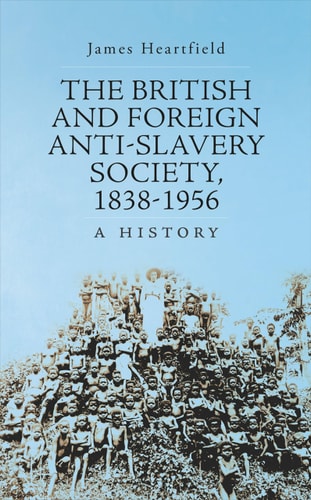
The British and Foreign Anti-Slavery Society, 1838-1956: A History
0
0
As an Amazon Associate and affiliate partner, Menrva Books earns from qualifying purchases. Learn more
Author Description
After West Indian slavery was abolished in 1833, the anti-slavery campaign turned to the wider world and the goal of Universal Emancipation. Veteran agitators Joseph Sturge, Lord Brougham and John Scoble launched the British and Foreign Anti-Slavery Society at a world convention in 1840.Throughout its long history the British and Foreign Anti-Slavery Society was instrumental in framing Britain's diplomatic policy of promoting anti-slavery - a policy that projected moral authority over allies and rivals, through naval power and international tribunals.The BFASS pushed for and prepared the 1890 Brussels conference that divided Africa between the European powers, on the grounds of fighting Arab slavers. The Society was torn between its belief in the civilising mission of Europeans, and its brief to protect Africans. Rubber slavery in the Belgian Congo, indentured 'coolies' in the Empire, and forced labour in British Africa tested the Society's goals of civilising the world.This first comprehensive history of the Society draws on 120 years of anti-slavery publications, like the Anti-Slavery Reporter, to explain its unique status as the first international human rights organisation; and explains the Society's surprising attitudes to the Confederate secession, the 'Coolies', and the colonisation of Africa.
Menrva's Summary
THE THESIS
This work investigates how the British and Foreign Anti-Slavery Society (BFASS) evolved from a domestic abolitionist movement into an international entity that shaped British diplomatic policy and moral authority for over a century. James Heartfield, a scholar of history and politics, utilizes 120 years of archival material, including the Anti-Slavery Reporter, to analyze the organization's complex role in global affairs. The book argues that the Society's advocacy often intersected with imperial interests, creating a tension between humanitarian goals and the realities of European colonial expansion.
THE SCOPE MAP
What You Will Find
- A chronological history of the BFASS from 1838 to 1956.
- Analysis of the Society's influence on British foreign policy and international tribunals.
- Examination of the Society's stance on the 1890 Brussels conference and the partition of Africa.
- Case studies on the Belgian Congo rubber trade, indentured labor, and the Confederate secession.
Scope Limits
- The text focuses primarily on the institutional history of the BFASS rather than the grassroots experiences of enslaved individuals.
- It does not provide an exhaustive biography of every individual member, focusing instead on organizational strategy and policy impact.
THE AUTHORITY PERSPECTIVE
Historians and researchers recognize this work as a significant contribution to the study of early international human rights organizations and their entanglement with imperial power. Readers frequently note the academic rigor of the research and the author's willingness to address the contradictions inherent in the Society's civilizing mission.
Page Count:
504
Publication Date:
2016-01-01
Publisher:
Oxford University Press
ISBN-10:
0190491671
ISBN-13:
9780190491673
History
Social History
Human rights
British History
Political History
Colonialism
Community Tags
Similar Books